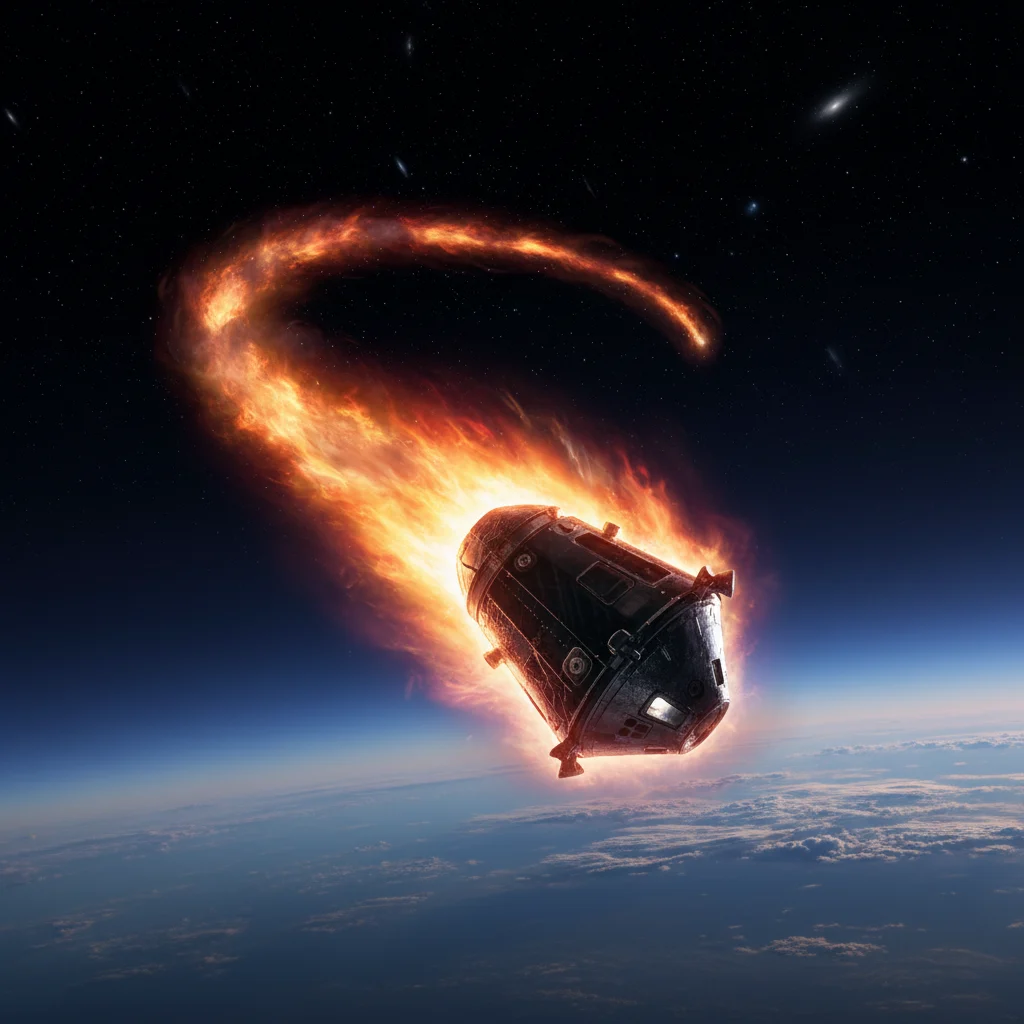
On Sunday, the Indian Space Research Organisation’s (ISRO) Polar Satellite Launch Vehicle (PSLV) suffered a catastrophic anomaly six minutes into its flight, resulting in the presumed loss of 16 payloads. However, one spacecraft—Orbital Paradigm’s Kestrel Initial Demonstrator (KID)—miraculously survived the tumbling failure, successfully separating from the doomed rocket and transmitting vital reentry data before crashing back to Earth.
A Rare Escape from a Reliable Workhorse
The PSLV has historically served as one of the global space industry’s most reliable medium-lift launch vehicles. Sunday’s rare anomaly occurred at the end of the third-stage engine burn, sending the rocket into an uncontrollable tumble before it could reach its targeted orbit.
While the launch vehicle failed to deliver its customer spacecraft to their intended destinations in low Earth orbit, the rocket’s payload fairing jettisoned exactly as planned at the end of the second-stage engine burn. That nominal jettison event left a crucial window of opportunity for the KID spacecraft to leap to relative safety.
Surviving a mid-flight launch vehicle breakup is an exceptionally rare feat for any payload, especially a small demonstrator craft not explicitly designed with complex launch abort systems. In an exclusive interview, Orbital Paradigm CEO Francesco Cacciatore shared the intricate details of KID’s narrow escape from total disaster.
Telemetry Against All Odds