
Silicon Valley-based startup Luminary Cloud is upending traditional aerospace engineering as computational fluid dynamics and “physics AI” now simulate complex aerodynamic behaviors in mere seconds. Speaking on the Space Minds podcast, Luminary Cloud CTO and Stanford University professor Juan Alonso detailed a fundamental shift in how rockets, aircraft, and hypersonic systems are designed to meet rising global defense challenges. This technological leap dramatically accelerates development cycles, shifting an industry historically constrained by sluggish computational limits into an era of near-instantaneous iteration.
For decades, aerospace engineers relied on traditional computational fluid dynamics (CFD) to solve complex equations detailing how air flows around a rocket launch vehicle or inside a thruster. While historically groundbreaking, these numerical simulations often took 10 to 12 hours to complete a single query, creating severe bottlenecks in the design and certification cycle.
The Rise of Physics AI
The explosion of available data, combined with advanced machine learning techniques, has birthed a new paradigm: physics AI. This technology generates massive amounts of data through numerical simulation and synthesizes it with physical testing metrics to train highly accurate, predictive models.
Engineers can now query the physical world and receive accurate performance predictions almost instantly. This allows designers to explore hundreds of hypothetical alternatives in the time it previously took to test just one.
Alonso notes that this leap forward relies heavily on the unique concentration of interdisciplinary talent found in Silicon Valley. The convergence of experts in cloud computing, GPU architecture, physical analysis, and data visualization has created a fertile ground for these giant leaps in engineering. However, the modern remote work ecosystem also allows startups to tap into a global talent pool to complement localized expertise.
Accelerating National Defense and Hypersonics
The stakes for this accelerated design process extend far beyond commercial aviation. As international competition intensifies, the United States faces immense pressure to accelerate its development cycles, particularly in the realm of hypersonic weaponry. With nations advancing rapidly, and hypersonic technologies proliferating on battlefields from Ukraine to programs in Iran and North Korea, the ability to innovate quickly is a matter of national security.
Physics AI provides a critical advantage in this new arms race. By allowing defense contractors to explore vast design spaces intelligently and quickly, engineers can conceptualize and refine systems that confer significant strategic advantages.
Luminary Cloud’s recent collaboration with aerospace giant Northrop Grumman exemplifies this shift. The partnership focuses on rethinking traditional engineering workflows, embedding new AI technologies to prototype and discover optimal solutions faster than ever before. The goal is not merely incremental improvement; companies are pushing to make their design processes ten times faster, rather than just 10 percent faster.
Mitigating Risk Through Data Integration
Despite the remarkable speed of algorithmic design, the increased reliance on simulations raises questions about accuracy and safety. No numerical simulation is flawless, and real-world testing remains a critical component of aerospace engineering.
Physics AI addresses these concerns by acting as a bridge between the digital and physical realms. By absorbing data from physical testing and merging it with simulated environments, the resulting models offer higher credibility and confidence. Alonso views these AI tools not as replacements for human engineers, but as highly capable assistants—likening the technology to a digital co-pilot. These systems present clever designers with optimized options, ultimately leading to higher confidence and lower risk in the final product.
This integration also highlights a fundamental shift in how aerospace companies value their assets. The lifeblood of the physics AI revolution is data. Training robust models requires massive, meticulously curated datasets.
Consequently, an organization’s accumulated knowledge, represented by its data, is becoming its primary competitive advantage. Companies must now implement comprehensive data strategies, investing heavily in data centers, organization, security, and accessibility.
Blurring the Lines Between Earth and Orbit
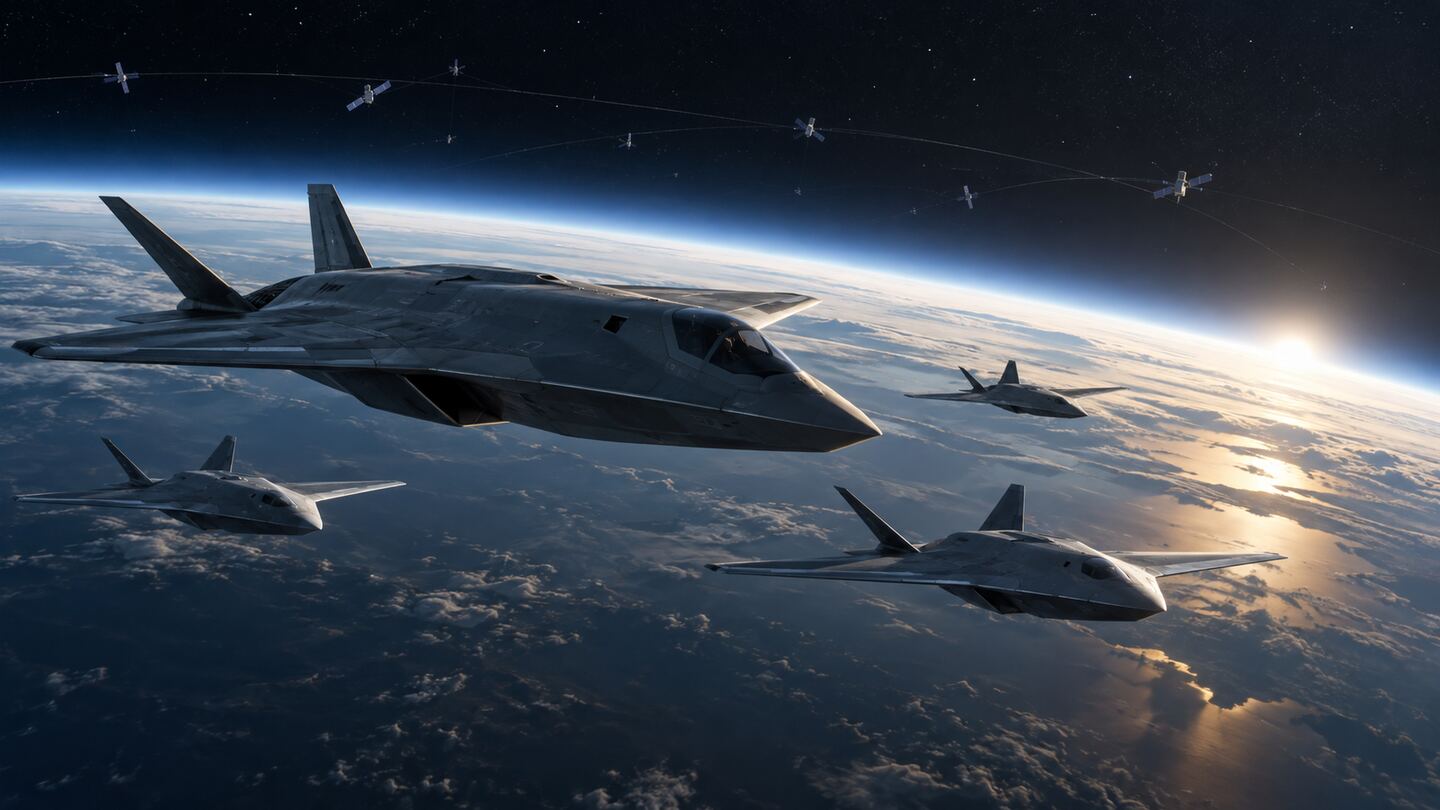
As these tools mature, the historical boundaries separating atmospheric flight and orbital technologies are rapidly dissolving. The foundational physics governing commercial aviation, hypersonic glide vehicles, space-access systems, and atmospheric re-entry are remarkably similar.
Because physics AI allows engineers to accurately predict system performance across various conditions without physically building the hardware, the technology is highly transferable. Innovations developed for low-earth orbit can seamlessly inform atmospheric aircraft design, and vice versa.
This interconnected ecosystem is driving an unprecedented era of accessibility in space engineering. Where space programs were once the exclusive domain of global superpowers, university students are now building and operating satellites from their campus laboratories.
As physics AI evolves from a novel concept into an indispensable engineering standard, the global aerospace industry faces a radical restructuring. Policymakers and regulators will be challenged to keep pace with systems that are conceptualized and deployed at warp speed. Organizations that fail to rethink their workflows and harness their proprietary data risk obsolescence in a rapidly accelerating global space race. Over the next decade, the mastery of physics AI will not only dictate market dominance but fundamentally redefine the limits of human space exploration and defense capabilities.