
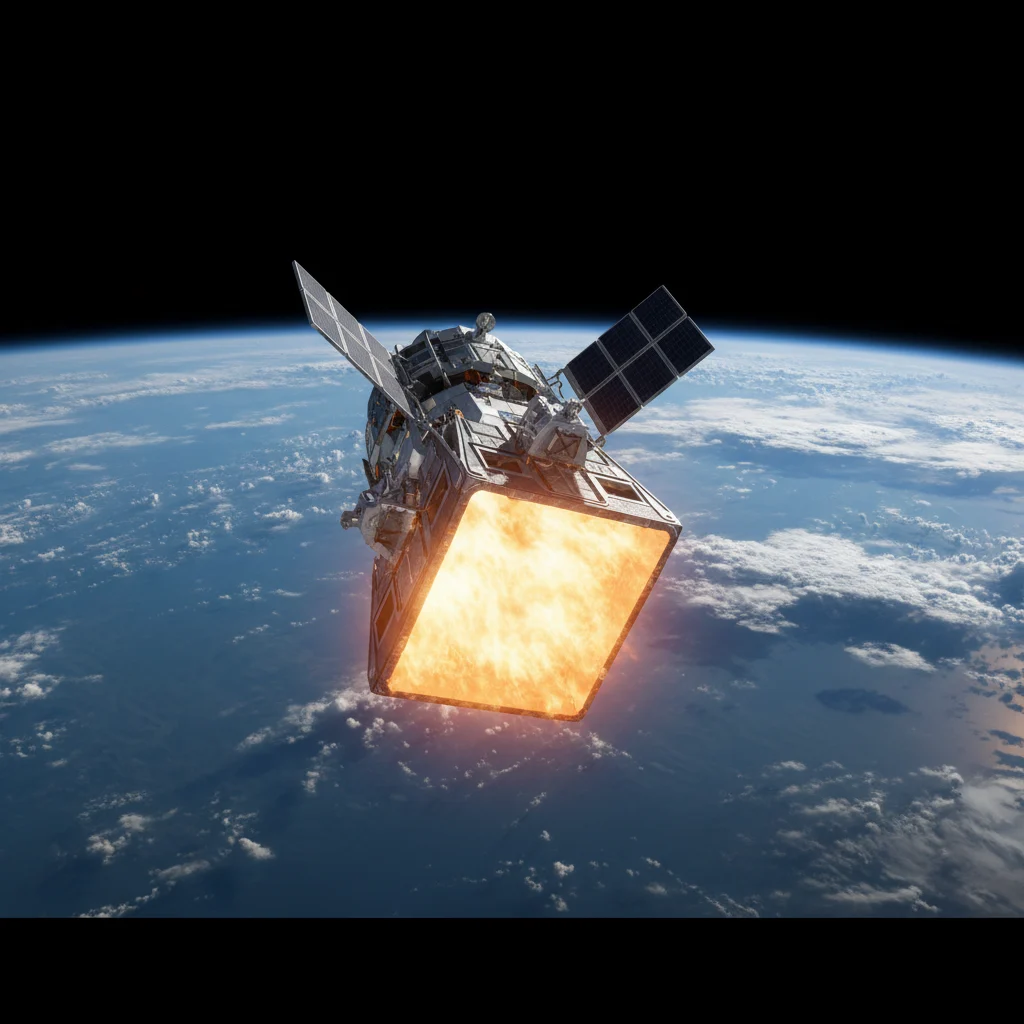
Colorado-based space startup Lux Aeterna announced a $10 million seed funding round today to launch its inaugural reusable satellite platform, Delphi, slated for orbit in the first quarter of 2027.
The investment aims to disrupt the stubbornly single-use satellite market by applying the proven reusable rocket model directly to orbital space hardware.
The Shift from Single-Use Hardware
For decades, the aerospace industry has accepted a fundamental operational constraint: satellites are one-way investments. Once launched, spacecraft operate until their components fail or their fuel depletes, eventually burning up in the Earth’s atmosphere or joining a growing cloud of orbital debris.
While reusable launch vehicles have dramatically lowered the cost of access to space over the past decade, satellite payloads have largely remained single-use assets.
Payload operators currently face immense pressure to engineer hardware that can survive years in the harsh space environment. This requirement drives up development costs, lengthens manufacturing timelines, and stifles rapid technological iteration.
Seed Funding and Strategic Backing
Konvoy Ventures led the $10 million seed round, signaling strong venture capital interest in the emerging space return sector.
The raise also saw participation from returning investors Space Capital, Dynamo Ventures, and Channel 39 Ventures. New capital flowed in from Decisive Point, Cubit Capital, Wave Function Ventures, and a syndicate of other backers.
Brian Taylor founded Lux Aeterna in 2024 after accumulating extensive industry experience building satellites for SpaceX’s Starlink, Amazon’s Project Kuiper, and Loft Orbital. His new venture represents a fundamental pivot from the traditional satellite engineering ethos of his previous employers.
Taylor noted that optimizing less for mass allows for entirely new operational capabilities in orbit.



Leave a Reply