
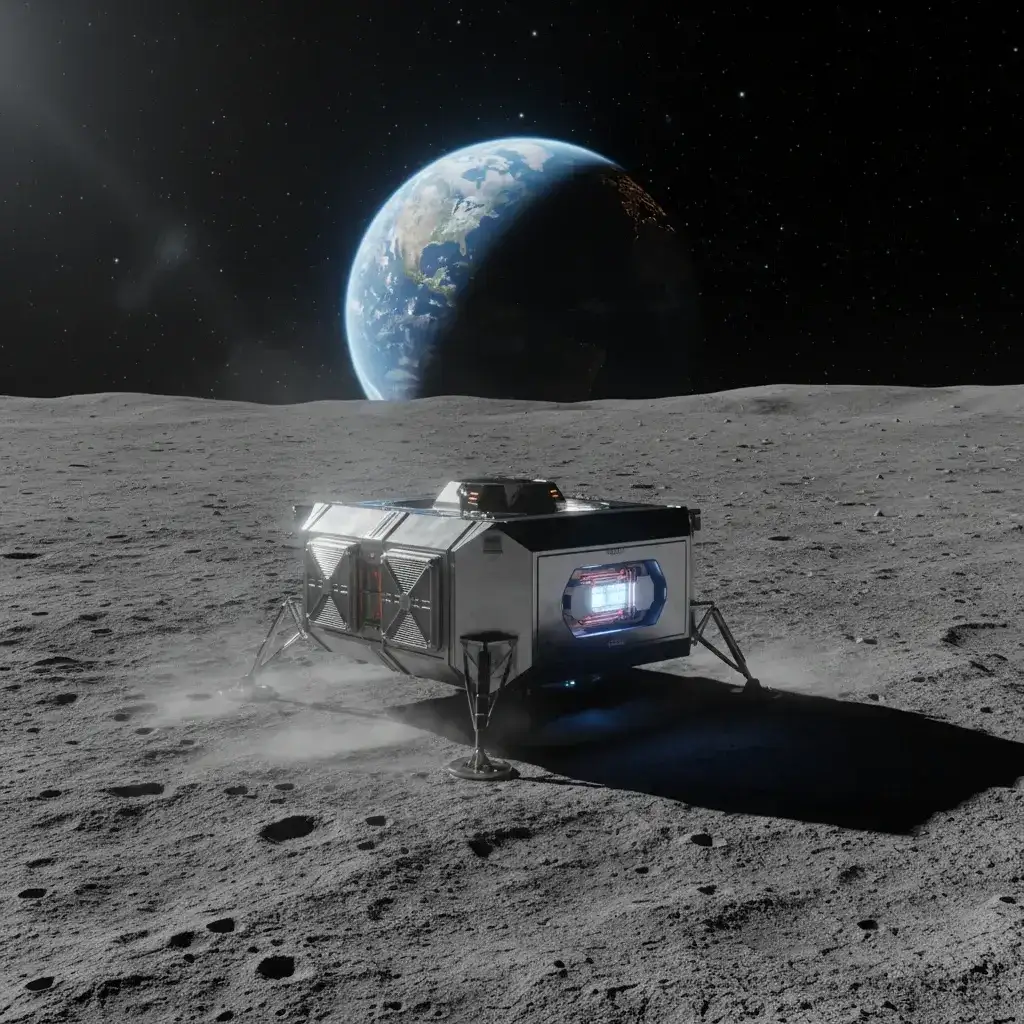
On February 4, the House Science, Space, and Technology Committee unanimously passed the NASA Reauthorization Act of 2026, advancing legislation that could serve as a watershed moment for the nascent commercial space nuclear power sector. By expanding NASA’s nuclear capabilities and mandating commercial partnerships, the bill aims to accelerate the deployment of next-generation power systems for lunar exploration and beyond.
The legislation still faces a lengthy process, requiring approval from the full House of Representatives, consideration by the Senate, and a presidential signature. However, for an industry struggling to transition from research to commercial viability, the committee’s unanimous approval signals a critical shift in Washington’s approach to deep space infrastructure.
Addressing the Deep Space Power Deficit
Space nuclear technology has long been recognized as a fundamental requirement for sustained operations in environments where solar power is insufficient. Conventional solar arrays cannot sustain hardware through the freezing, two-week-long lunar night, nor can they efficiently power missions to the outer planets.
Despite this clear operational need, the commercial sector has faced steep regulatory and financial barriers preventing widespread development. The newly advanced legislation seeks to dismantle these hurdles by encouraging NASA to coordinate closely with the Department of Energy on space nuclear research and development.
Crucially, the bill explicitly directs the space agency to collaborate with commercial entities “to the maximum extent possible.” This mandate represents a significant departure from traditional, government-led development models, opening the door for private enterprise to lead the design and manufacturing of space nuclear systems.
Solving the ‘Chicken and Egg’ Dilemma
For startups like Zeno Power, which builds radioisotope power systems designed to keep lunar hardware operational, government backing is the missing catalyst. Tyler Bernstein, CEO of Zeno Power, noted that the new bill gives NASA the necessary structure and authority to execute its existing plans at a much faster pace.