
WASHINGTON—NASA Administrator Jared Isaacman is marking his 100th day in office this Saturday with a sweeping overhaul of the agency’s lunar ambitions.
Speaking across Washington, D.C., this week, Isaacman delivered a stark mandate to industry leaders, international partners, and government officials: NASA is pivoting aggressively toward a crewed lunar base to beat China to the Moon.
This abrupt shift aims to consolidate agency focus, prioritizing national security and high-impact headlines over a sprawling portfolio of legacy programs.
A Mandate for Dramatic Change
Since taking office in December, Isaacman has made no apologies for reshaping NASA into his own mold for success.
He spent his initial months on a listening tour across various agency centers, gathering feedback directly from employees. Now, he is translating those insights into a radical restructuring of NASA’s priorities and workforce strategy.
At the core of this transformation is a move to reduce the agency’s reliance on private contractors. Isaacman intends to bring more critical development in-house, ensuring NASA retains direct control over its most vital missions.
Isaacman has also championed a new era of transparency. He spoke openly to the press about these sweeping changes, a notable departure for an agency that has faced criticism for being less-than-forthcoming in recent years.
The Artemis Ambush
The most significant policy shifts were unveiled during Tuesday’s “NASA Ignition” event, an intensive eight-hour briefing that caught many industry stakeholders off guard.
Isaacman and senior NASA officials outlined a radically compressed timeline for the Artemis program. The new roadmap mandates a higher flight cadence and pushes the first crewed surface landing to no earlier than (NET) Artemis IV.
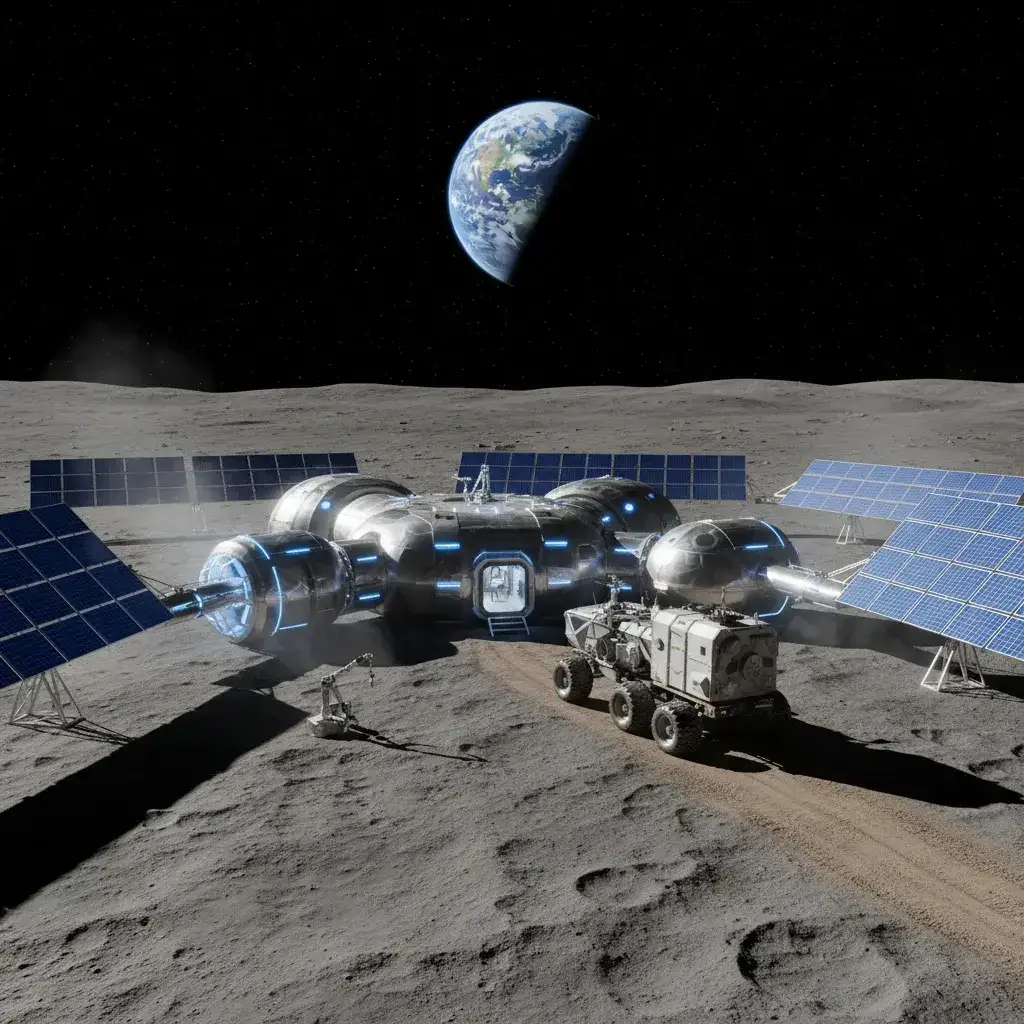
More drastically, NASA is discarding the lunar-orbiting Gateway station in favor of accelerating a permanent surface base. The sudden pivot triggered immediate personnel shifts within the agency.
Carlos Garcia-Galan, who managed NASA’s lunar-orbiting habitat program just last week, has been abruptly reassigned. He is now the program executive overseeing the ambitious plan to construct the lunar surface base at record speed.
The agency also revealed plans for a fleet of Mars helicopters delivered by nuclear power, alongside major overhauls to procurement programs like the Commercial Lunar Payload Services (CLPS), Lunar Terrain Vehicle (LTV), and Commercial LEO Destinations (CLD).
Powering this new era of exploration introduces its own set of hurdles. Experts at a recent industry seminar warned that commercial space nuclear missions face severe logistical barriers, identifying insurance as the single biggest “show stopper” for commercial nuclear deployment.
Global and Industrial Fallout
The sudden pivot has sent shockwaves through the commercial space sector and international space agencies.
Industry executives, given less than a week’s notice for the Ignition event, expressed frustration over the abrupt changes. Some contractors had spent years and millions of dollars scaling manufacturing to meet previous NASA demands.
One space official noted that frustrated industry insiders have dubbed the sudden pivot the “Artemis ambush.”
International partners face even steeper hurdles. The European Space Agency (ESA) and major European contractors like Thales Alenia Space and Airbus had invested hundreds of millions of euros into developing key components for the now-paused Gateway station.
These partners are now scrambling to determine how their investments can be repurposed for a lunar surface base.
Despite the friction, CLPS companies are viewing the revised strategy as an “opportunity bomb.” NASA’s vision involves supplying the future lunar base through monthly uncrewed lunar landings, potentially creating skyrocketing demand for commercial payload delivery as soon as next year.
Space Race 2.0 and Soft Power
Beyond the technical logistics, Isaacman is leaning heavily into the geopolitical stakes of lunar exploration.
Speaking at the Hill and Valley Forum, he framed NASA’s success as a critical component of United States national security. Isaacman argued that establishing a lunar base before China will project unparalleled American capability.
He warned that if the U.S. fails to secure the Moon, adversaries may question American dominance in other geopolitical arenas.
“Now we find ourselves with a real political rival,” Isaacman told attendees. “They may be early, and recent history suggests we might be late. This is why it is imperative we leave an event like Ignition with complete alignment on the national imperative that is our collective mission.”
He reiterated this message at the Meridian Space Diplomacy Forum, emphasizing the importance of the Artemis Accords. Isaacman noted that contributions from allied nations remain essential to ensuring the return to the Moon is a collective victory for all mankind.
Looking Ahead to FY2027
While the immediate reaction from the space community involves a mix of cautious optimism and profound confusion, the long-term viability of Isaacman’s vision hinges on funding.
The ambitious shift from orbital outposts to rapid surface colonization requires immense capital, congressional buy-in, and immunity from future political shifts. Industry leaders are currently attempting to navigate this volatile new landscape.
However, many acknowledge that the short-term disruption could yield massive long-term gains if NASA fully commits to procuring the hardware necessary for a permanent lunar base.
The true test of Isaacman’s overhaul arrives next week with the release of the White House’s FY2027 budget request. Expected to hold at an $18.8 billion top line, the budget proposal mirrors the administration’s fiscal 2026 request and will likely require cuts to NASA’s science and STEM missions to finance this aggressive new chapter in lunar exploration.


Leave a Reply