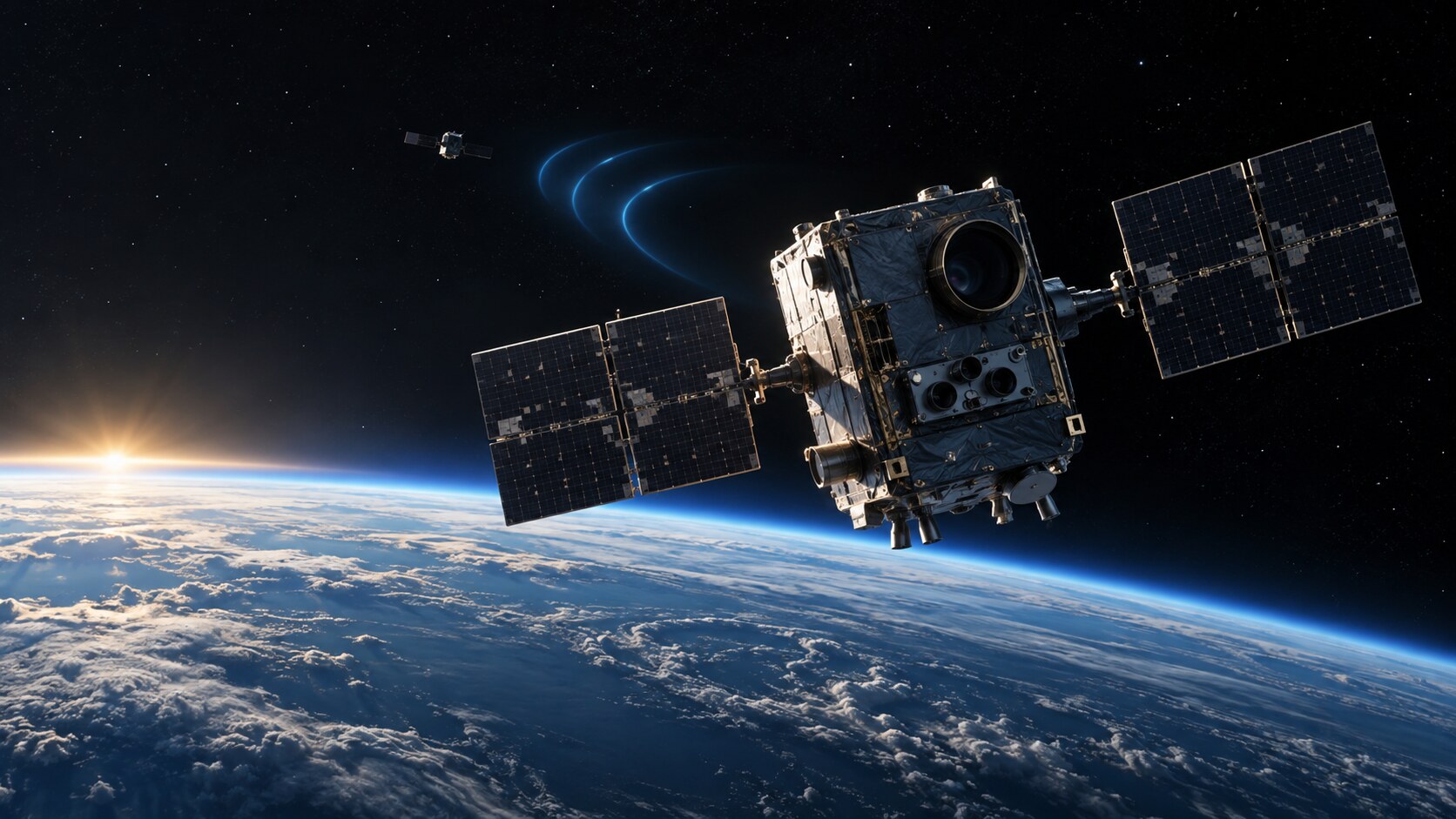

Airbase emerged from stealth today with a $5 million funding round led by Andreessen Horowitz to automate radio frequency spectrum allocation, addressing a critical regulatory bottleneck for the booming commercial space industry.
The startup aims to replace decades-old, manual coordination processes with dynamic software, ensuring that the growing number of orbital missions can communicate without catastrophic signal interference.
The seed round highlights growing venture capital interest in space infrastructure software—the digital “picks and shovels” required to sustain modern orbital operations. Alongside lead investor Andreessen Horowitz (a16z), the round saw participation from Squadra Ventures and Founders You Should Know.
The Spectrum Bottleneck
Radio frequency (RF) spectrum is the invisible infrastructure powering the modern space economy. It is an absolutely finite physical resource required for everything from GPS navigation and broadband satellite communications to studying space weather and earth observation.
Because spectrum is limited, organizations are allocated highly specific frequency bands for their operations. If two satellites broadcast on the same frequency over the same area, the resulting interference can cause severe data loss, compromised command links, or total mission failure.
Despite the space industry’s rapid technological advancements, the regulatory framework managing its communications remains distinctly analog. The Federal Communications Commission (FCC) process for approving and allocating spectrum data currently relies heavily on manual processes, legacy databases, and static PDF documents, according to an Airbase fact sheet.
This antiquated approach has created a severe regulatory traffic jam. As commercial spaceflight costs plummet, the number of active satellites in low Earth orbit (LEO) continues to multiply exponentially, pushing the manual spectrum allocation system to its breaking point.
Automating Orbital Infrastructure
Airbase is seeking to modernize this critical infrastructure by replacing manual paperwork with automated software. The company’s platform is designed to automate the spectrum allocation process entirely.
This includes dynamically deconflicting the use of spectrum among commercial and government operators and managing complex frequency databases in real time. By digitizing the workflow, Airbase hopes to turn a months-long regulatory headache into a streamlined, software-driven process.
The startup has already secured its first federal contract to deploy its spectrum-management technology. While Airbase declined to disclose the specific government customer or the financial value of the award, the agreement marks a significant early validation of their technological approach.
“This prototype contract enables end-users to field-test our spectrum licensing and automated coordination tools,” Airbase CEO and cofounder Ari Rosner said.
“These early engagements provide the feedback loop necessary for rapid iteration, and integration, into daily federal spectrum management workflows,” Rosner added.
Federal Traction and Aerospace Pedigree
The startup brings significant aerospace pedigree to the complex spectrum problem. Rosner, recently recognized as a 2024 Payload Pioneer, was previously the second hire at space defense company True Anomaly.
His background also includes tenure at NASA’s Jet Propulsion Laboratory (JPL), where he worked on high-profile planetary science missions including the Mars Perseverance rover and the Europa Clipper.
Co-founder and Chief Technology Officer Millen Anand joins Airbase from earth observation giant Planet Labs. Anand previously engineered RF payloads for Boeing’s geostationary satellites, providing deep technical expertise in the very hardware Airbase aims to coordinate.
Preparing for ‘Weird Space’
The launch of Airbase aligns perfectly with a broader push for modernization within federal regulatory bodies. Better handling of spectrum allocation has become a top priority for FCC leadership as novel and increasingly complex space missions come online.
The agency is actively exploring ways to adapt its frameworks for the modern space age. Specifically, the FCC is looking to accommodate what industry insiders refer to as “weird space” operations.
These unconventional commercial missions include in-orbit servicing, space manufacturing, active debris removal, and private space stations. Because these vehicles behave differently than traditional communications satellites, they do not fit neatly into existing regulatory categories.
The FCC is expected to meet this Thursday to formally consider a proposal that would grant these unconventional space operations greater, more flexible spectrum access. Software solutions like Airbase could prove vital in managing this new, complex class of orbital traffic.
As megaconstellations grow and commercial lunar economies begin to take shape, the sheer volume of RF coordination required will soon exceed human administrative capacity. Automating spectrum allocation is no longer just an efficiency upgrade; it is a fundamental requirement for the continued safe expansion of the space economy.
Industry observers and regulatory bodies will be watching closely to see if Airbase’s software can successfully integrate with existing federal workflows during its prototype phase. If successful, the transition from static PDFs to dynamic, automated spectrum management could drastically reduce mission lead times, eliminate costly regulatory delays, and ensure the increasingly crowded orbital environment remains communicative and safe.