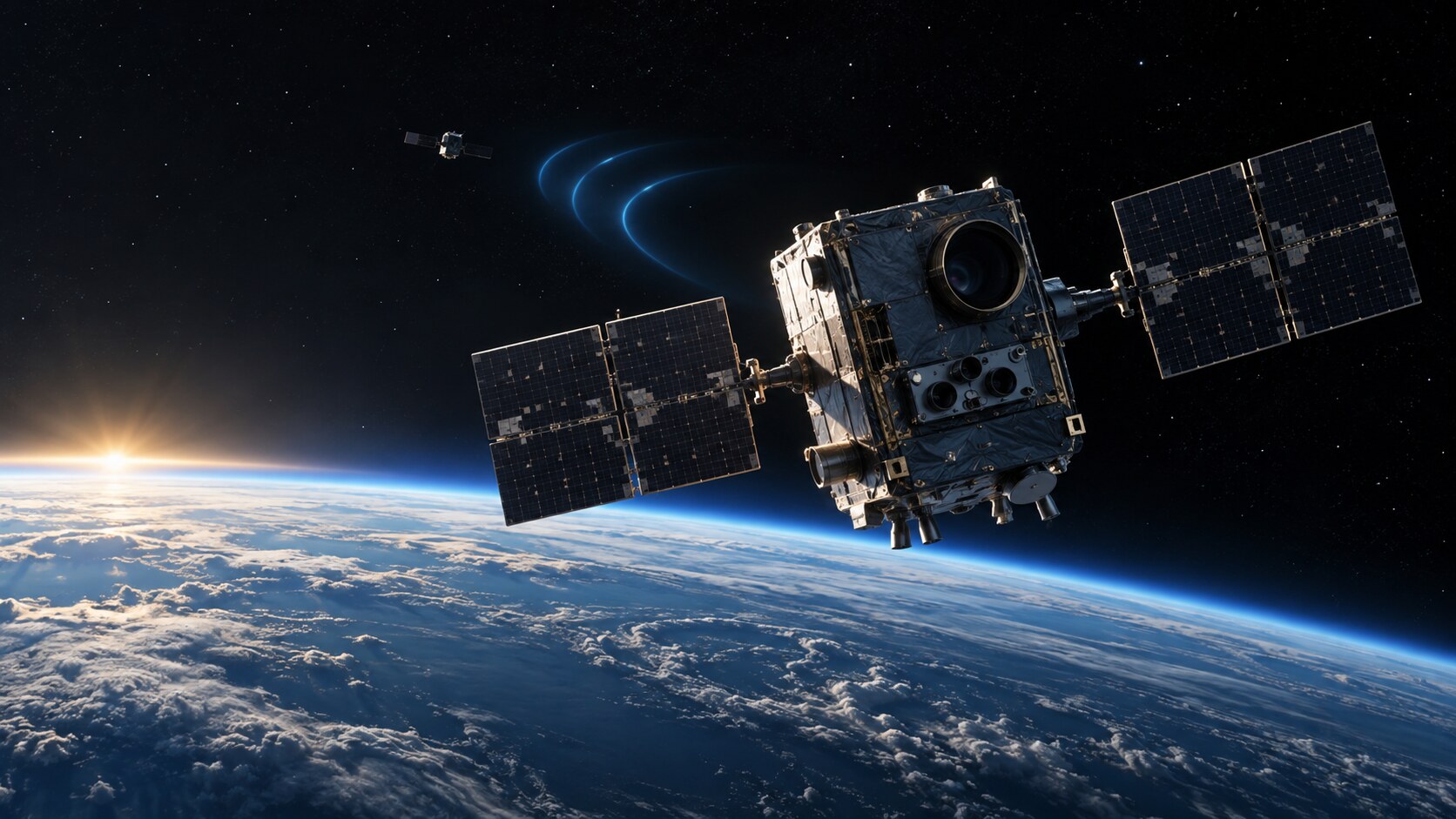

As the Pentagon advances its “Golden Dome for America” missile defense initiative to counter rapidly evolving hypersonic and ballistic threats, defense architects are fundamentally reassessing their sensor strategies. While space-based systems have dominated recent orbital defense discussions, military engineers and defense experts are increasingly pointing to ground-based optical sensors as the crucial, agile component needed to ensure mission persistence. To maintain accuracy in a highly contested environment, planners are recognizing that terrestrial optics provide a necessary hedge against the rapid obsolescence of orbital hardware.
The Accelerating Threat and the Orbital Bottleneck
The Golden Dome initiative represents a monumental systems engineering challenge designed to shield national assets from next-generation weaponry. Adversaries are currently deploying hypersonic glide vehicles, complex decoys, and highly maneuverable ballistic missiles that drastically compress response timelines. In this high-stakes environment, even minor gaps in tracking accuracy can result in catastrophic interception failures.
Historically, defense planners have prioritized space-based sensors to achieve global awareness. However, orbital assets present a severe hardware bottleneck for long-term defense programs. Satellites essentially become technological time capsules the moment they leave the launchpad. They remain unable to receive physical hardware upgrades to match the accelerating speed of global threat innovation.
While space-based sensors deliver unmatched global access, they struggle to provide continuous observation over specific geographic locations. Orbital constellations inherently offer revisit capabilities rather than persistent, uninterrupted stares. Achieving continuous global coverage from space requires launching and replenishing hardware at costs that defy traditional strategic logic.
Overcoming Orbital Dilution with Ground Scalability
Defense experts note that Golden Dome’s most complex hurdle is not the initial detection of a hostile launch. Instead, the primary challenge lies in maintaining uninterrupted target custody long enough to support confident engagement decisions under immense pressure.
Ground-based optical sensors directly address this vulnerability, often referred to as orbital dilution. Fixed terrestrial sites maintain a continuous, unwavering stare over priority threat corridors and critical defended assets. Defense planners can densify this ground coverage where threats are most acute, deploying additional land or sea-based sensors on timelines measured in months rather than years.
This scalable density augments high-cost space systems and bridges the critical gap between early warning and kinetic engagement. For a program as critical as Golden Dome, continuous local custody acts as the decisive factor that transforms an early warning alert into a viable kinetic solution.
Agility and Survivability in Contested Domains
Any future conflict will immediately contest the Golden Dome’s sensor layer. Adversaries will deploy electronic attacks, cyber intrusions, and direct kinetic threats to blind the defense network. Consequently, survivability must serve as a foundational architectural pillar rather than an operational afterthought.
Ground-based optics provide a distinct tactical advantage through their passive operational nature. Because these sensors do not emit active signals, adversaries face significant difficulties in locating, targeting, or jamming them. Deploying these sensors as a distributed network mirrors the “proliferate to survive” principle currently driving interest in massive satellite constellations, but entirely bypasses the extreme costs and logistical burdens of space hardware.
Furthermore, ground systems offer a rapid modernization velocity that orbital platforms lack. Technicians can continuously maintain and upgrade terrestrial sensors. While orbiting sensors remain frozen in their launch configurations, ground stations can receive improved detectors, refined optical filters, and enhanced processing algorithms. As adversarial countermeasures evolve, engineers can rapidly patch software and update cyber defenses, maintaining a decisive upgrade velocity over the threat.
Geometric Certainty and Decision-Quality Data
Golden Dome requires decision-quality tracking data to function effectively. The system must instantaneously determine threat location, trajectory, payload characteristics, and confidence levels. Defense scientists emphasize that mission success relies heavily on geometry and target discrimination rather than raw sensor sensitivity alone.
According to industry analysis from experts like Junk Wilson and John Noto of Orion Space Solutions, ground-based optical sensors are essential for meeting this rigorous requirement. Through precise triangulation, ground optics convert isolated observations into highly accurate tracks that orbital sensors frequently struggle to resolve on their own.
When defense systems fuse these high-fidelity terrestrial tracks with space-based infrared data and radar telemetry, the resulting target custody becomes robust enough to defeat sophisticated decoys. Spectral discrimination plays an equally vital role in this tracking process.
Missile phenomenology typically features narrow, structured emissions rather than broad signatures. By prioritizing narrowband and multispectral filtering, ground optics dramatically improve signal-to-noise ratios. This precision allows the network to maintain persistent custody of dim or aggressively maneuvering targets that traditional sensors would otherwise lose.
Architectural Implications for Future Defense
The architectural reality for Pentagon planners is that Golden Dome cannot operate as a competition between space and ground domains. Instead, it must function as a layered, hybrid ecosystem where the strengths of one layer compensate for the inherent limitations of another. Space-based sensors will continue to provide indispensable global access, but ground-based networks must serve as the foundational infrastructure that delivers persistent local custody.
Moving forward, the defense acquisition community faces a critical inflection point. Treating ground-based optical networks merely as a supporting layer risks creating an expensive, slow-to-evolve space program vulnerable to rapid adversary advancements. If planners build the system primarily as an orbital project, it will struggle to adapt to compressing threat development timelines.
As the Pentagon finalizes its architecture, watch for a strategic pivot toward tightly integrated sensing models. Defense budgets and acquisition strategies will likely begin reflecting a hybrid approach, anchoring space and radar layers with agile ground-based optics. The ultimate success of the nation’s premier missile defense shield will hinge entirely on whether architects prioritize this resilient, adaptable ground integration to preserve decision advantage under stress.