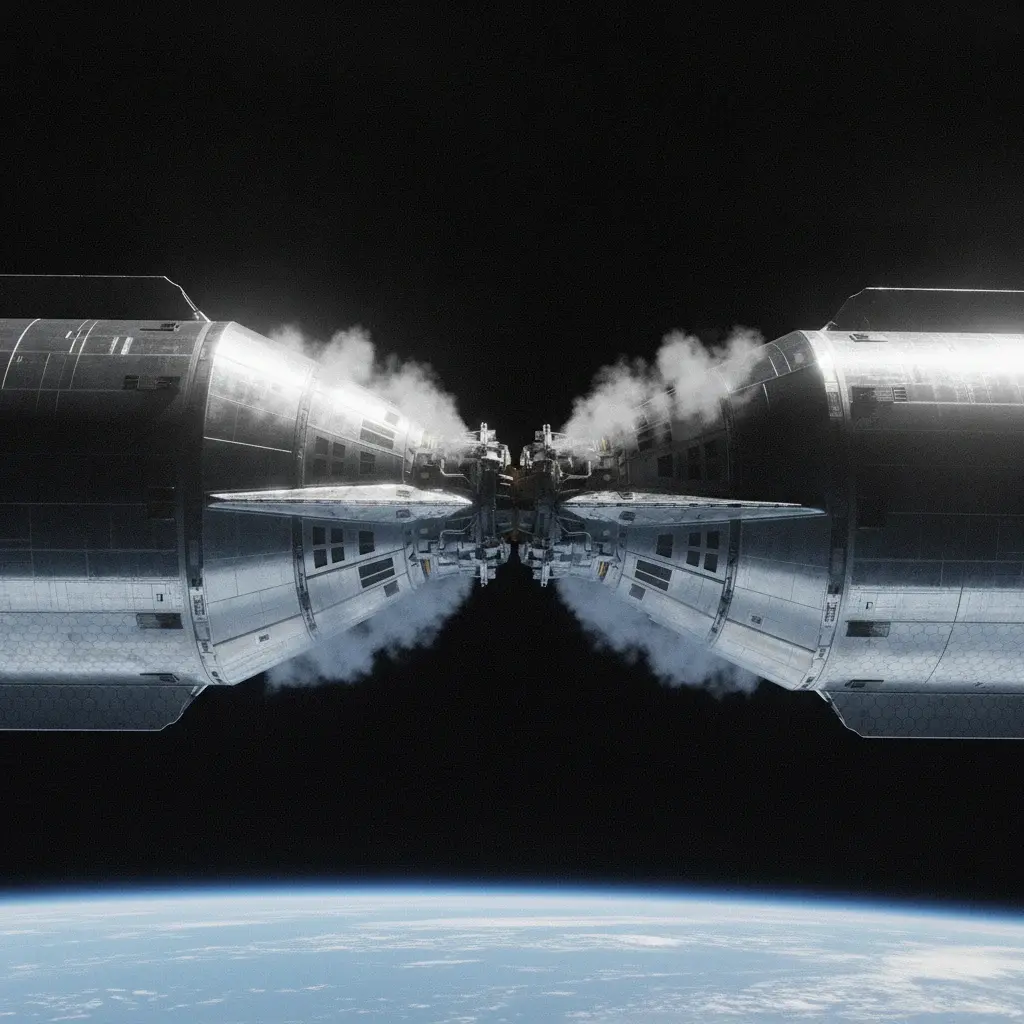
On October 7, 2026, SpaceX successfully executed the first large-scale autonomous cryogenic propellant transfer between two Starship vehicles in low Earth orbit, resolving the primary technical bottleneck for NASA’s Artemis III lunar landing mission. This orbital maneuver, conducted 400 kilometers above the Pacific Ocean, demonstrated the viability of ship-to-ship liquid oxygen and methane transfer in microgravity. The success of this mission provides the critical logistical foundation for heavy-lift deep space transit, moving the industry from experimental launches to sustainable interplanetary infrastructure.
The Necessity of Orbital Refueling
To reach the lunar surface with significant payloads, heavy-lift rockets must overcome the tyranny of the rocket equation, which dictates that the fuel required to lift fuel into orbit increases exponentially with mass. Current chemical propulsion systems lack the energy density to launch a fully-fueled lander directly from Earth to the Moon. Consequently, the Space Force and NASA have prioritized “distributed launch” architectures where a vehicle launches nearly empty and refuels in orbit.
Previous attempts at fluid transfer in space were limited to small-scale experiments or hypergolic fuels used in satellite servicing. The SpaceX demonstration involved the transfer of over 50 metric tons of sub-cooled liquid oxygen, a feat that requires precise thermal management to prevent boil-off. Without this capability, the Human Landing System (HLS) would remain stranded in Earth orbit, unable to perform the Trans-Lunar Injection (TLI) burn required for the Artemis program.
Technical Execution and Precision
The mission utilized two specialized Starship variants: a “Target” tanker that had been loitering in orbit for four days and a “Chaser” transport vehicle. The docking sequence relied on an upgraded version of the Dragon-derived autonomous docking system, modified for the massive inertia of the 120-meter-tall vehicles. Sensors monitored internal pressures to ensure that the cryogenic liquids did not cavitate or cause structural damage during the high-pressure flow.
Data released by SpaceX engineers indicates that the transfer achieved a flow rate of 1,200 kilograms per minute, exceeding the minimum requirements set by NASA’s Tipping Point contract. This speed is essential for operational efficiency, as prolonged exposure to solar radiation in orbit increases the risk of fuel heating. The use of settle-acceleration—using small thrusters to create a slight artificial gravity—ensured the liquid remained at the bottom of the tanks during the transfer process.
The Shift in Space Economics
Industry analysts suggest that the success of orbital refueling fundamentally alters the valuation of the space sector. By decoupling launch mass from mission range, the cost per kilogram to the lunar surface is projected to drop by nearly 40% over the next three years. This efficiency gain is not limited to SpaceX; it validates the business models of competitors like Blue Origin, whose Blue Moon lander also relies on liquid hydrogen refueling architectures.
Critics, however, point to the complexity of the “tanker farm” model. To fully fuel a single lunar-bound Starship, SpaceX may require between eight and twelve tanker launches in rapid succession. This high launch cadence places unprecedented strain on the Starbase and Kennedy Space Center launch pads. The environmental impact of these frequent launches remains a point of contention for regulatory bodies and local advocacy groups.
Geopolitical and Commercial Implications
The timing of this milestone is significant as the China National Space Administration (CNSA) accelerates its own plans for the International Lunar Research Station (ILRS). The ability of the United States to maintain its lead in the lunar race depends entirely on the reliability of this refueling technology. If orbital transfer becomes a routine utility, the Moon ceases to be a destination for flags and footprints and becomes a viable commercial precinct.
Furthermore, the technology has immediate applications for satellite life extension and debris removal. A standardized refueling port, now being debated by the International Organization for Standardization (ISO), could allow commercial satellites to operate for decades rather than years. This would transform the current “disposable” satellite industry into a circular economy, reducing the proliferation of orbital debris.
The focus now shifts to the duration of cryogenic storage. The next phase of testing, scheduled for December 2026, will evaluate how long these super-cooled propellants can be maintained in orbit before thermal degradation occurs. Observers should watch for the FAA’s upcoming environmental impact statement regarding increased launch frequencies at Boca Chica, as the regulatory bottleneck may now be more significant than the technical one.