The Department of the Air Force is preparing for a battlefield transformed by autonomous systems, artificial intelligence and rapidly evolving threats. Secretary Troy Meink says the answer is not simply to spend more, but to acquire differently, field greater numbers of lower-cost systems and push authority closer to those responsible for delivery.
The U.S. Air Force and Space Force are being asked to modernize at a speed their traditional acquisition and budgeting systems were never designed to support. That was the central message delivered by Secretary of the Air Force Troy Meink during his keynote address at the 2026 Air, Space and Cyber Conference at National Harbor, Maryland.
In a speech that ranged from autonomous aircraft and orbital weapons to acquisition reform and basic military training, Meink described a Department of the Air Force attempting to adapt to a security environment in which technology and battlefield tactics can change in months rather than decades. His blueprint rests on a clear proposition: the United States must generate more combat power, field it faster and keep it affordable enough to buy at scale.
The department’s enduring task remains to protect the United States, deter potential adversaries and prevail if deterrence fails. What has changed is the environment in which that mission must be performed. Meink warned that “the threat is changing actually faster than I thought possible,” capturing the urgency behind the department’s current reforms.
A battlefield changing faster than the budget cycle
Recent wars have exposed how quickly relatively inexpensive technology can alter the balance on the battlefield. In Europe, one-way attack drones have taken on roles traditionally associated with artillery, while expensive armoured platforms can be forced to remain concealed or inactive. Artificial intelligence is also improving rapidly, giving military forces new tools for programming, cyber operations, intelligence analysis, targeting and battlefield coordination.
The implications extend well beyond the world’s largest military powers. Technologies that were once available only to countries with enormous defence budgets can now be acquired, modified and deployed by smaller states and non-state actors. Commercial components, open-source software and increasingly capable AI models allow users to experiment quickly and scale successful ideas.
That creates a difficult mismatch for the Pentagon. Adversaries can adapt inexpensive systems over short cycles, while major U.S. defence programmes may still take years to move through requirements, contracting, development and production. Annual appropriations and long-range procurement plans remain essential for accountability, but they can struggle to keep pace with technologies that evolve between budget submissions.
Meink’s answer is not to abandon advanced, high-performance platforms. Instead, the department wants to complement them with large numbers of less expensive autonomous and modular systems. He summarized the goal as “cost-effective combat power”: capability that is operationally useful, available in meaningful numbers and economically sustainable.
Crewed and autonomous aircraft operating together
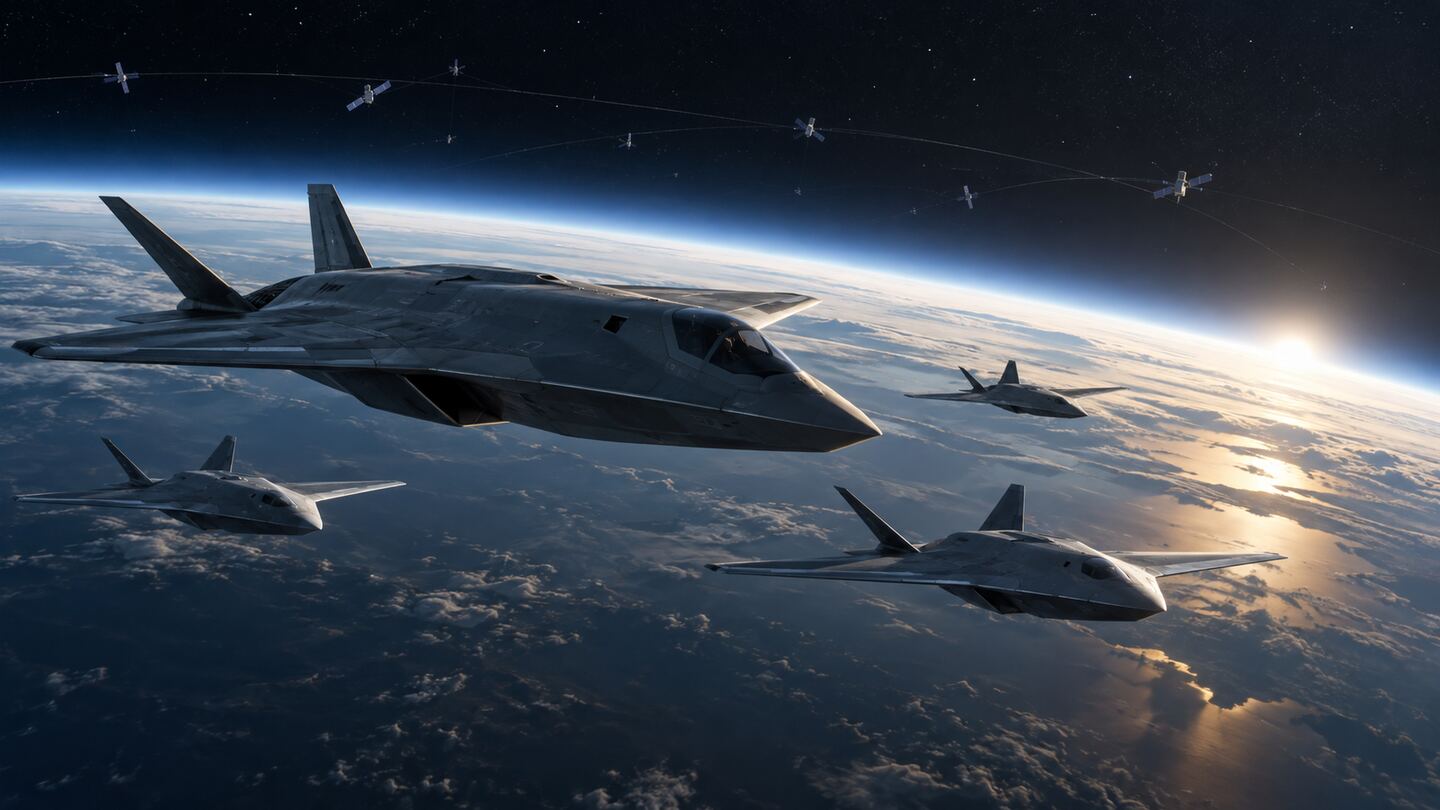
The future force outlined by Meink would combine crewed aircraft with autonomous systems across a broader mix of missions. High-end fighters, bombers and specialist aircraft would remain important, but they would increasingly operate alongside uncrewed platforms capable of expanding sensor coverage, carrying weapons, creating tactical dilemmas and accepting levels of risk that would be inappropriate for a human pilot.
This approach is intended to solve both an operational and an economic problem. A force composed mainly of exquisite, expensive aircraft can deliver exceptional performance, but fleet size becomes constrained as unit costs rise. It can also be difficult to replace losses or sustain operations in a prolonged conflict. Lower-cost autonomous systems could add mass without requiring the Air Force to reproduce the cost, training pipeline and support structure associated with every crewed aircraft.
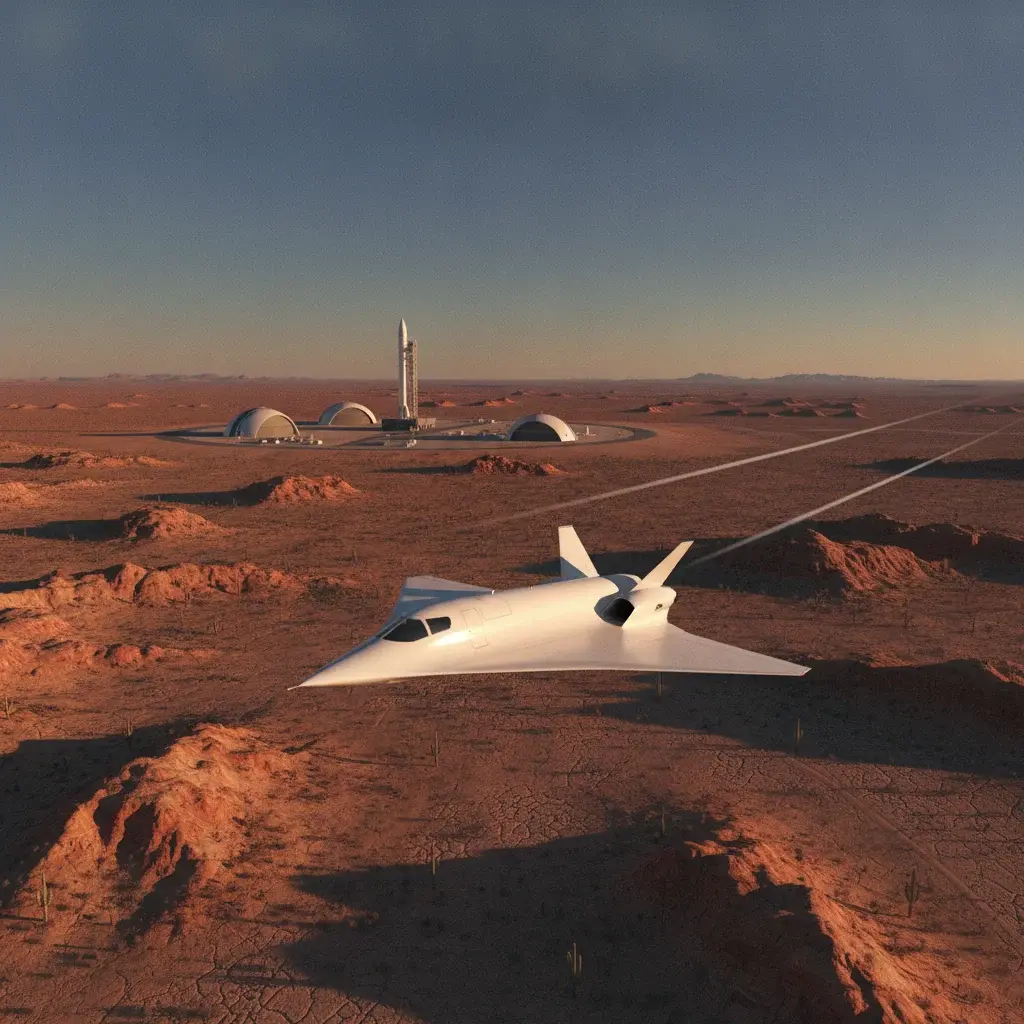
Collaborative Combat Aircraft, or CCAs, sit near the centre of that vision. Meink said the Air Force intends to have at least 500 CCAs in service by 2032. These autonomous fighters are expected to carry out some of the tasks currently performed by crewed aircraft, although their exact mission combinations will depend on technology, doctrine and operational testing.
The department also formally named two new autonomous aircraft: the FQ-42 Vengeance and FQ-44 Fury. The names give the programmes a more visible identity, but the more consequential issue is whether the Air Force can move them from development into affordable production at the scale promised.
Meink also pointed to autonomous one-way attack weapons for special operations forces. By 2032, he expects those units to be able to employ thousands of such systems. The concept reflects lessons from current conflicts, where relatively low-cost weapons can overwhelm defences, strike targets at range and impose an unfavourable cost exchange on an opponent.
If these plans succeed, the service will not simply add drones to its existing structure. It will also rethink mission planning, human supervision, data sharing, maintenance and operational risk. Meink predicted a “radically different looking Air Force by 2032,” an ambitious timeline for technological and cultural change.
Mass Modular Aircraft add another layer
Alongside CCAs, the Department of the Air Force is developing a category called Mass Modular Aircraft, or MMA. These uncrewed, multipurpose aircraft are intended to provide long-range combat capability in an affordable and attritable form. Attritable does not mean disposable in every mission. It generally describes a platform inexpensive enough that commanders can expose it to higher risk without treating every loss as strategically or financially unacceptable.
The proposed economics are striking. Subject to budget support, the department aims to field 100 MMAs by 2029. Meink said each would cost about half as much as a CCA and roughly one-tenth as much as a fifth-generation fighter. The objective is then to expand the MMA fleet to 500 operational aircraft by 2032.
Those targets make affordability an operational requirement rather than a secondary purchasing concern. A brilliant design bought only in small quantities may be less useful in a high-intensity conflict than a simpler system available in hundreds. Quantity improves resilience and complicates an adversary’s targeting.
However, projected unit costs are easiest to achieve before a programme enters large-scale production. Requirements growth, software complexity, supply-chain limitations and low production rates can all drive prices higher. The credibility of the MMA strategy will therefore depend on disciplined requirements, modular designs, genuine competition and a willingness to resist adding expensive features to every airframe.
Open architectures and greater competition
Open Systems Architecture is one of the mechanisms the department hopes will prevent those costs from spiralling. Rather than building platforms around tightly controlled, proprietary systems that are difficult to modify, an open architecture uses common standards and interfaces. In principle, new sensors, software, weapons or communications components can be integrated without redesigning the entire platform or relying indefinitely on a single prime contractor.
For the Air Force and Space Force, the attraction is faster upgrades and a wider pool of suppliers. Companies can compete to provide subsystems, software and mission capabilities, creating more choices and potentially lowering prices. Open interfaces can also allow the government to replace an underperforming component without discarding the larger platform.
The concept is strategically important because autonomous systems will need frequent updates. Algorithms, electronic-warfare techniques and communications methods can lose their advantage quickly once an adversary understands them. A modular force should be able to evolve more rapidly than one dependent on long, platform-wide upgrade cycles.
Space Force confirms a more active defensive posture
Meink’s remarks also contained a significant disclosure about military operations in orbit. He acknowledged that the Space Force has deployed on-orbit space-control weapons intended to defend the joint force against hostile action. Although the speech offered few details about the systems, the statement illustrates how the Space Force is moving beyond monitoring and support functions toward a more explicit role in protecting U.S. military capabilities in space.
Satellites enable communications, missile warning, navigation, intelligence and targeting across the joint force. Their importance makes them attractive targets during a major conflict. Defensive space-control capabilities are therefore becoming more prominent as Russia, China and other actors develop ways to disrupt, degrade or destroy space services.
At the same time, the department is pursuing resilience through proliferated constellations. Spreading capability across larger numbers of satellites can make the overall network harder to disable than one dependent on a small number of extremely valuable spacecraft. Meink cited progress on a Space-Based Interceptor programme that moved from an initial contract to flight-ready hardware in under a year, as well as work on the Space Data Network.
He also said launches for an Air Moving Target Indication constellation would begin during September 2026. Space-based moving-target tracking could strengthen the ability to detect and follow aircraft and other airborne targets across wide areas, potentially supporting operations in regions where conventional airborne surveillance platforms face access or survivability challenges.
Together, these programmes show the same philosophy being applied across both services: distribute capability, shorten development cycles and avoid relying exclusively on a small number of costly systems.
Defending bases in the drone era
Modern aircraft and satellites will provide limited value if the bases supporting them remain vulnerable. Meink highlighted a renewed emphasis on point defence following advances by U.S. adversaries and operational experience connected to Iran. The term covers the systems, training and coordination used to protect bases, airfields and other critical sites from airborne attack.
The growth of drones and precision weapons has made that challenge harder. Installations may face threats ranging from small commercial-style drones to cruise missiles and one-way attack aircraft. No single sensor or interceptor can economically defeat every target.
The department’s response will require layered defences, better detection, electronic warfare, lower-cost interceptors and clear responsibility for coordinating them. Meink stressed the need to remove organisational gaps and make point defence seamless. This is as much a command-and-training problem as a hardware problem: even capable systems can fail if warnings, authorities and operating procedures are fragmented.
Reforming acquisition and preparing people
Meink’s blueprint extends beyond equipment. Basic Military Training has been adjusted to expose Airmen earlier to flightlines, ranges and operational environments. The Air Force Academy has also been reorganised around a stronger focus on the profession of arms. These steps suggest an effort to connect personnel more directly with the service’s combat mission from the beginning of their careers.
Artificial intelligence is also entering routine operations. Hundreds of tools reportedly support functions such as sortie scheduling and data fusion. Though less visible than autonomous aircraft, these applications could release personnel for higher-value work and help commanders process information faster.
Acquisition reform is the institutional foundation of the wider plan. The department has established 26 Portfolio Acquisition Executives, each responsible for delivery within a defined mission area. Meink said the department is delegating nearly every authority it legally can to these executives, including milestone decision authority for most programmes.
That structure is intended to reduce layers of approval and make leaders accountable for outcomes across a portfolio. Success will depend on giving those executives sufficient staff, reliable data and the freedom to reshape programmes that are not delivering.
Industry and Congress will determine whether the plan works
The modernization blueprint ultimately depends on resources and industrial performance. Meink warned that the United States cannot expect a world-class military without choosing to fund it. Yet his message was not simply a request for larger budgets. It was also a challenge to defence companies whose weapons, components and systems have increased in price faster than inflation.
Industry will need to demonstrate that new production methods, open architectures and competition can translate into lower costs and higher output. Congress, meanwhile, will decide whether the department receives timely and predictable funding for CCAs, MMAs, proliferated constellations, base defence and other priorities. Delayed appropriations or repeated changes in direction could undermine programmes built around rapid scaling.
The tension is clear. The services need sophisticated capabilities against advanced adversaries, but sophistication has often produced slower development, smaller fleets and higher sustainment costs. The department is trying to preserve its technological edge while changing the economics of military power.
Success will not be measured by the number of new programme names or prototypes unveiled. It will be measured by whether useful systems reach operational units quickly, work together under realistic conditions and can be produced in quantities large enough to matter. If the department can combine advanced crewed platforms with hundreds of autonomous aircraft, resilient satellite networks, stronger base defences and faster acquisition, the force of 2032 could indeed look very different.
The risk is that old patterns reassert themselves: requirements expand, costs rise, production slows and supposedly affordable systems become too valuable to lose. Meink’s blueprint recognizes that danger. Its central test is whether the Department of the Air Force can make affordability, adaptability and scale enduring features of force design rather than temporary slogans.
Source: U.S. Air Force — “Meink offers blueprint for modernizing Air, Space Forces ‘affordably’,” published September 14, 2026. Direct quotations are from Meink’s conference address as reproduced in the official report.