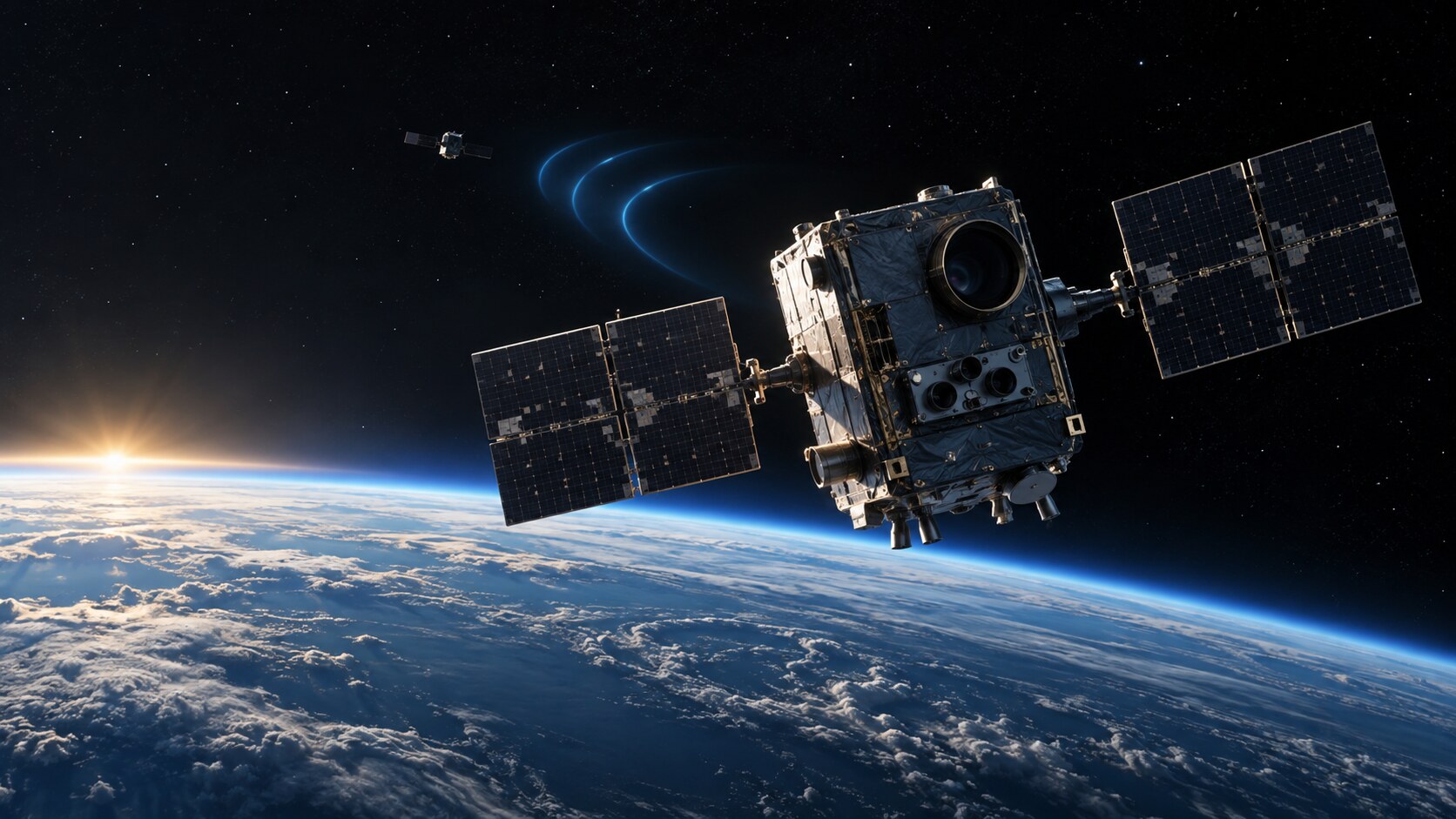

Swiss space technology startup Pave Space has secured $40 million in seed funding to engineer a heavy-duty orbital transfer vehicle capable of repositioning satellites from low Earth orbit (LEO) to their ultimate destinations in a matter of hours. Announced on March 25, the capital injection will accelerate the development of a 20-metric-ton kickstage designed to bypass the months-long transit times currently plaguing the commercial space industry. The venture is aggressively targeting its first major commercial heavy kickstage flights for 2029.
Breaking the Orbital Bottleneck
The commercial space economy is experiencing unprecedented growth, yet a significant logistical bottleneck remains in last-mile orbital delivery. Currently, most heavy launch vehicles deploy payloads exclusively into LEO. Satellites destined for medium Earth orbit (MEO), geostationary Earth orbit (GEO), or lunar trajectories must then rely on their own propulsion systems to reach their operational altitudes.
For operators utilizing onboard electric propulsion, this journey can take anywhere from six to 12 months. The financial implications of this transit delay are substantial, as satellite operators begin generating revenue only when their assets reach their final orbital slots. A six-month delay in a satellite’s operational start translates directly into millions of dollars in deferred or lost revenue.
While chemical propulsion or dedicated high-altitude launches offer faster deployment alternatives, they are often prohibitively expensive. Furthermore, these options are severely constrained by launch vehicle availability, rigid scheduling, and limited payload capacities.
A Heavy-Duty Space Tug
Pave Space aims to bridge this critical gap with an in-space transport layer that acts as a heavy-duty space tug. According to CEO and co-founder Julie Böhning, the planned vehicle will boast the capacity to haul up to five metric tons of payload from LEO to higher-energy orbits in less than 24 hours. The system is designed to be hardware-agnostic, meaning it will be fully compatible with all existing and upcoming heavy-lift launch vehicles for initial LEO insertion.
While the orbital transfer vehicle (OTV) market has seen an influx of new entrants in recent years, most existing space tugs are designed for micro-satellites and small payloads. Pave Space is taking a distinctly different approach by targeting the heavy-lift segment. At 20 metric tons, the Pave vehicle is a massive piece of orbital infrastructure, specifically engineered to handle the heavy, high-value telecommunications and defense satellites that form the backbone of the global space economy.
A key differentiator for Pave Space is its reliance on storable propulsion technology. Böhning noted that this engineering choice significantly reduces ground operation constraints and simplifies the integration process with various launch vehicles. Furthermore, storable propellants eliminate the boil-off risks associated with cryogenic fuels, resulting in a highly reliable and operationally efficient transport system.
By acting as a universal third stage, the Pave kickstage also allows satellite manufacturers to optimize their spacecraft designs. Without the need to carry massive onboard propulsion systems and fuel reserves for orbit raising, manufacturers can dedicate more mass and volume to revenue-generating payloads, such as advanced transponders and larger antenna arrays.
Securing European Space Sovereignty
Founded in 2024 by Böhning and Chief Technology Officer Jérémy Marciacq, Pave Space is positioning itself as a cornerstone of European space sovereignty. The duo previously collaborated on the Gruyère Space Program, a European reusable rocket initiative. Under that program, they successfully developed a demonstrator vehicle that executed 53 test flights in 2024, operating on a lean sponsorship budget of approximately $317,000 (CHF 250,000).
The company has since rapidly scaled its workforce, assembling a team of roughly 40 engineers and aerospace specialists. This technical architecture and aggressive scaling have already resonated with the market. The startup confirmed it has secured eight reservation agreements with satellite manufacturers and operators, and remains in active discussions with several major aerospace prime contractors.
The push for independent European space infrastructure is a driving force behind the company’s strategic vision. “Geopolitical dynamics are making sovereign telecommunications more critical than ever,” Böhning stated. She emphasized that in a fragmented European market, the ability to rapidly access high-energy orbits like GEO allows individual nations to deploy their own sovereign communication networks, rather than depending on shared, foreign-operated mega-constellations.
Achieving this requires fast, cost-efficient access that avoids the standard electric orbit-raising delays and bypasses the exorbitant costs of dedicated GEO launches. The substantial $40 million seed round underscores strong investor confidence in this vision. The funding round was co-led by prominent venture capital firms Visionaries Club and Creandum, with additional backing from Lombard Odier Investment Managers, Atlantic Labs, Sistafund, b2venture, ACE Investment Partners, Ilavaska Vuillermoz Capital, Pareto, and Motier Ventures.
Upcoming Milestones and Industry Impact
As the space industry shifts toward complex orbital logistics, Pave Space’s development timeline will face critical hardware validation milestones in the coming months. The company plans to launch a pathfinder mission dubbed “Graze” this October to test its proprietary avionics systems in the harsh environment of low Earth orbit.
Simultaneously, ground engineering teams are targeting the first ignition of the main thruster combustion chamber by the end of this year at a newly established test facility in the Swiss Alps. An integrated spacecraft, combining the flight computer and 50-newton thrusters, is slated for launch late next year.
Industry observers and satellite operators will closely monitor these early hardware tests. If Pave Space successfully validates its heavy kickstage technology, it could fundamentally alter the economics of satellite deployment, drastically reduce time-to-revenue for operators, and establish Europe as a dominant logistical player in the rapidly expanding cislunar economy.