
WASHINGTON — NASA’s abrupt proposal to overhaul its strategy for developing commercial space stations has sparked immediate backlash and confusion among private aerospace companies. During a March 25 hearing before the House Science Committee’s space subcommittee, industry leaders warned that the agency’s sudden strategic shift threatens billions in private investment and complicates the planned transition from the aging International Space Station (ISS).
A Sudden Shift in LEO Strategy
The controversy stems from an announcement made during NASA’s “Ignition” event on March 24. Agency officials revealed they are considering an alternative approach to the Commercial Low Earth Orbit Destinations (CLD) program. Under the original framework, NASA intended to help fund the development of free-flying, independent commercial space stations to replace the ISS after its planned retirement in 2030.
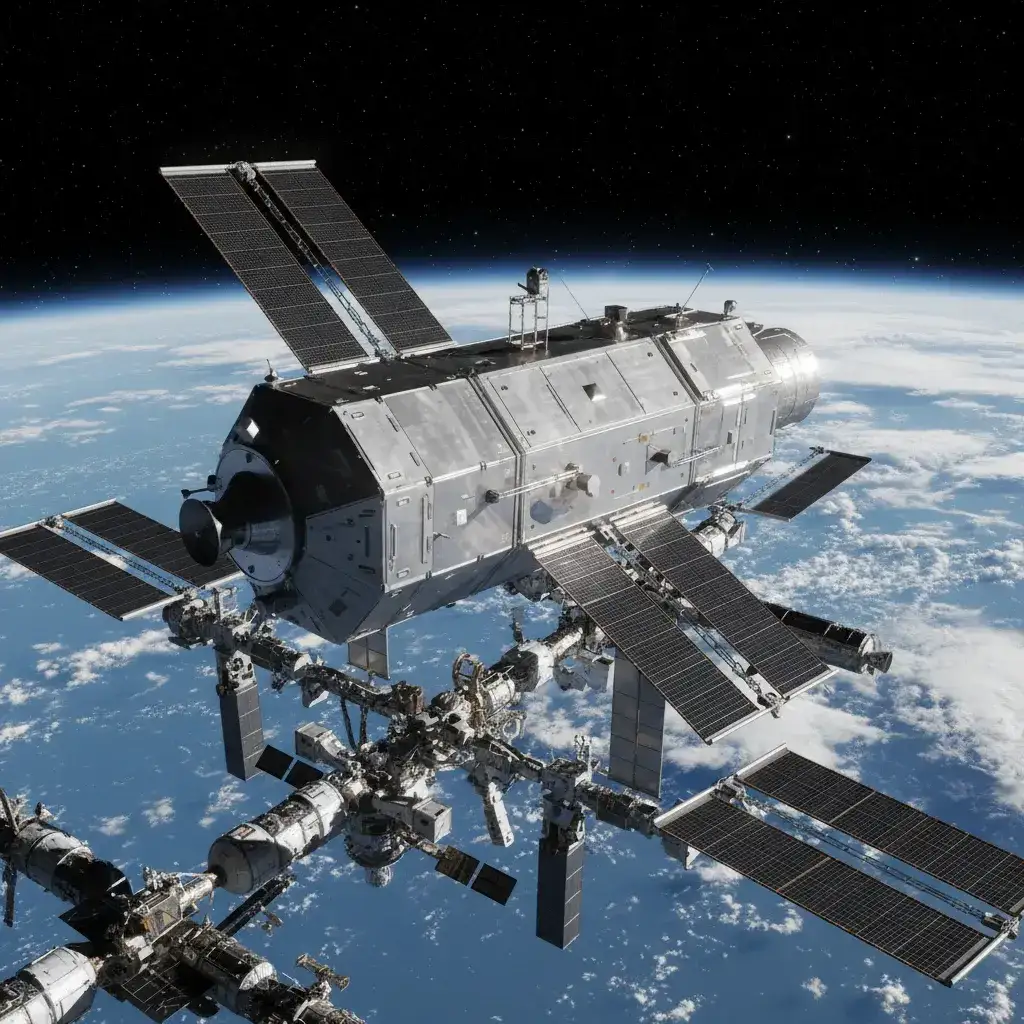
The newly proposed approach pivots toward an incremental model. NASA would now procure a core module directly from industry and install it on the existing ISS. Commercial companies could then attach their own modules to this NASA-procured core. Eventually, this new complex would detach from the ISS to form a standalone commercial station before the legacy outpost is decommissioned.
Market Realities and NASA’s Rationale
NASA justifies the pivot by pointing to a slower-than-expected commercial space market and a general lack of operational space station experience among private firms. Joel Montalbano, NASA’s acting associate administrator for space operations, defended the revised concept during the congressional hearing, stating that anticipated economic booms in low Earth orbit have not materialized.
“We expected a launch market that was going to take off. We expected tourism to take off. We expected the ability to do research and technology development on the International Space Station, bring it back to Earth and mass produce it,” Montalbano testified. “We’re not seeing any of those three things.”
Montalbano argued that continuing with the current CLD approach risks leaving NASA reliant on a single funded commercial station provider, a scenario he described as highly risky. He suggested the new core-module strategy offers multiple opportunities for the commercial industry to get involved incrementally. Because these early commercial modules would not need to be fully equipped—relying instead on the ISS for critical capabilities like life support—the barrier to entry would be lower.
Industry Pushback and Private Capital Concerns
The commercial space sector swiftly rejected NASA’s assessment of the market. Dave Cavossa, president of the Commercial Space Federation, testified that the agency’s announcement is actively damaging industry progress. Representing several companies developing commercial stations, Cavossa argued the market is robust and actively growing.
“Yesterday, NASA announced it is considering yet another major change to the Commercial LEO Destination program, sowing concern and, really, sowing confusion among the commercial space companies I represent,” Cavossa said. He dismissed NASA’s claims of a sluggish market, pointing to Starlab Space recently announcing it has fully booked its commercial payload racks.
“The commercial market is there. We’ve been building it,” Cavossa added. “NASA’s stated rationales for changes to the program are flawed and, ultimately, not addressed by their proposal yesterday.”
The proposed pivot also drew bipartisan scrutiny from lawmakers concerned about the chilling effect on private capital. Rep. George Whitesides, D-Calif., vice ranking member of the full committee, highlighted that companies have raised over $2 billion in private capital based on NASA’s original CLD plan.
Whitesides expressed concern that altering the deal now makes NASA an unreliable partner. “My concern is that if NASA is not a reliable partner for private investors, we’re not going to get that money and we’re not going to then save money by being able to cost-share with the private sector,” he warned.
Furthermore, Whitesides questioned the financial and logistical feasibility of building a new core module while simultaneously funding ISS operations through 2030. While Montalbano did not provide a specific budget for the core module, he suggested development costs would be mitigated by relying on existing ISS life support systems.
Timeline and Future Implications
To finalize its strategy, NASA issued a request for information (RFI) on March 25, seeking industry feedback on the alternative approach, technical requirements, and current market conditions. Responses are due April 8, alongside a separate RFI regarding crew and cargo transportation issues.
Montalbano indicated that NASA plans to release a final RFI in late April, followed by a formal request for proposals in June. He emphasized that the agency remains open to reverting to the original CLD approach if industry data proves the commercial market is sufficiently mature. “If there’s a commercial company out there and says, ‘NASA, your market analysis is incomplete or we have additional data that you don’t have,’ we want to hear that,” he noted.
However, industry advocates warn that the window for success is narrowing and that ongoing strategic uncertainty is actively stalling business plans. Cavossa testified that massive market interest is currently waiting on the sidelines for NASA to finalize its direction.
As the April RFI deadlines approach, the aerospace sector will be watching closely to see if NASA commits to its new incremental approach or restores the original framework. The agency’s upcoming procurement decisions this summer will not only dictate the financial viability of several major aerospace startups but will ultimately determine how the United States maintains its continuous human presence in low Earth orbit post-2030.