
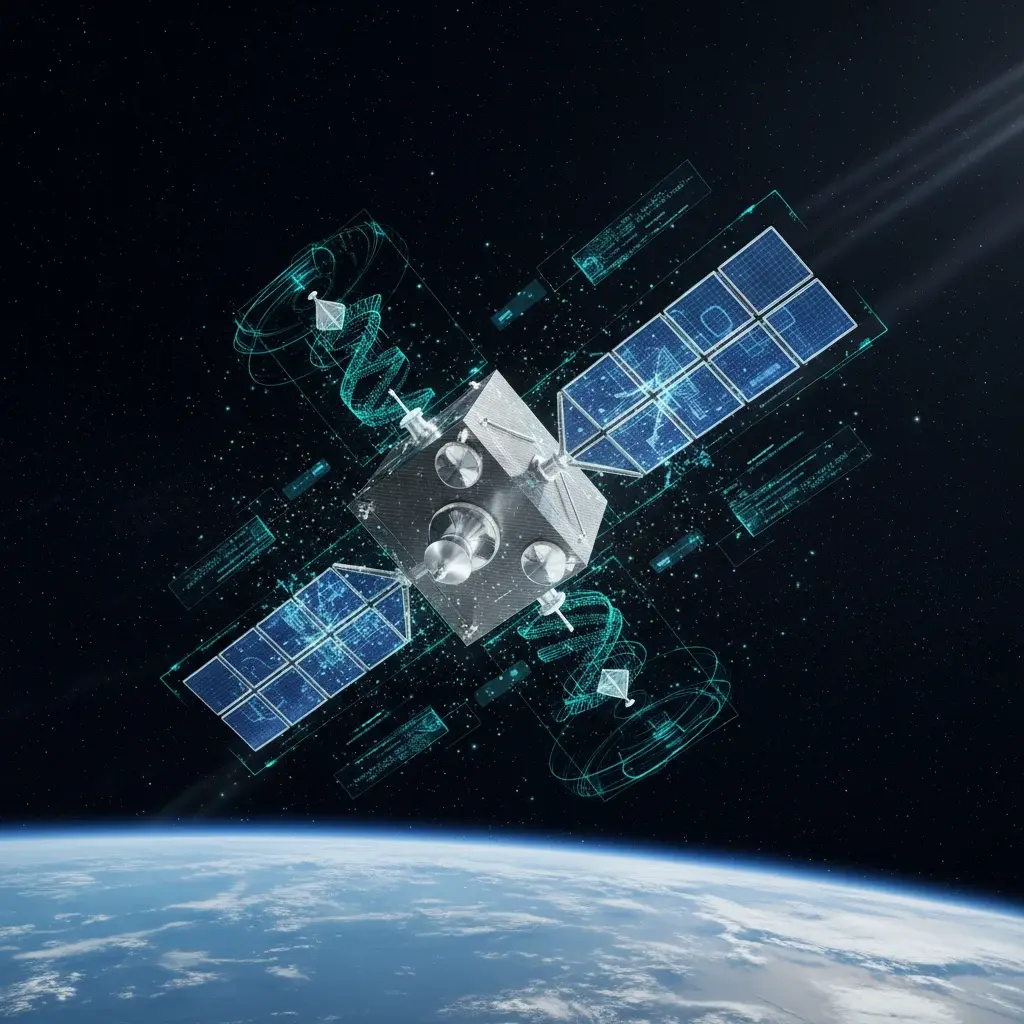
Space software startup Antaris has closed a $28 million Series A funding round to accelerate the development of its artificial intelligence-powered satellite planning platform. WestWave Capital led the investment round, which also saw strategic participation from Lockheed Martin Ventures and a syndicate of new investors. The capital injection aims to help satellite operators simulate missions and finalize hardware decisions entirely in a virtual environment before cutting any physical metal.
Founded in 2021, Antaris operates at the critical intersection of aerospace engineering and artificial intelligence. The company previously raised a $3.5 million seed round in September 2023, signaling rapid growth and high investor confidence in its technology over the past year. The traditional space industry relies heavily on expensive, time-consuming physical prototyping and rigorous testing. By shifting these core engineering processes to virtual environments, software-defined space missions are becoming a primary focus for both commercial and defense sectors.
Pioneering the Digital Twin in Orbit
Antaris aims to provide comprehensive AI assistance to speed up manufacturing pipelines for satellite developers. The company targets a wide array of mission profiles, ranging from commercial communications and Earth Observation (EO) to highly classified national security operations. The proprietary AI software is explicitly designed to assist operators throughout the entire lifecycle of a spacecraft, from the earliest conceptual planning stages to the satellite’s eventual end of life.
The flagship offering within the company’s software suite is the Antaris Intelligence platform, which features a core technology called TrueTwin. This system creates a high-fidelity digital twin of a satellite, functioning as an exact virtual replica of the physical hardware. TrueTwin allows operators and aerospace engineers to simulate software updates, test maneuvering operations, and model environmental stressors before carrying out any actual changes in space.
By testing commands on a digital twin first, operators can drastically reduce the risk of costly mistakes in orbit. In an environment where a single software bug or hardware malfunction can render a multi-million dollar asset useless, predictive simulation offers a critical safety net for satellite operators.
Strategic Defense and Commercial Validation
The inclusion of Lockheed Martin Ventures in this Series A round highlights the growing defense and national security applications of the Antaris platform. As space becomes increasingly congested and contested, military and intelligence agencies are seeking more resilient, adaptable satellite architectures. Software-defined satellites allow operators to reprogram and repurpose assets on the fly to respond to emerging threats or changing mission parameters.
“This investment validates our vision for software-defined space missions,” Antaris CEO and Cofounder Tom Barton said in a statement. “We’re now in position to push the boundaries of AI-native mission design and autonomous operations, giving customers the speed, resilience, and confidence they need to succeed in contested and commercial space.”
Barton’s emphasis on “contested” space underscores the dual-use nature of the Antaris Intelligence platform. The ability to autonomously manage satellite operations through AI not only drives down operational costs for commercial providers but also ensures rapid response capabilities for national security payloads.
Global Expansion and Strategic Partnerships
Antaris plans to utilize the $28 million capital infusion to speed up the technical development of the Antaris Intelligence platform and aggressively expand its global partnership network. This international outreach effort is already yielding significant commercial milestones for the California-based startup.
In February, the company signed a major agreement with SARsatX to help design and build a 16-satellite constellation for the Kingdom of Saudi Arabia. This partnership positions Antaris to capitalize on the rapidly expanding Middle Eastern space economy, which is currently seeing massive government investment in sovereign space capabilities. Furthermore, Antaris executives are actively exploring opportunities to break into the lucrative Japanese space industry, targeting collaborations with both established aerospace primes and emerging regional startups.
What to Watch Next
The successful funding of Antaris highlights a broader venture capital trend shifting toward space software and data infrastructure rather than purely hardware-focused launch vehicles. As the barrier to entry for launching satellites continues to drop, the market bottleneck has shifted to mission design, autonomous operations, and orbital management.
Moving forward, the industry will closely monitor how quickly Antaris can deploy its TrueTwin technology across major commercial constellations. If the platform successfully demonstrates significant cost reductions and extended satellite lifespans for early adopters like SARsatX, AI-native mission design could soon become the standard operating procedure for the entire aerospace sector. Investors and competitors alike should watch for Antaris to announce further integration partnerships with major defense contractors and expansion agreements in the Asian-Pacific market throughout the coming year.