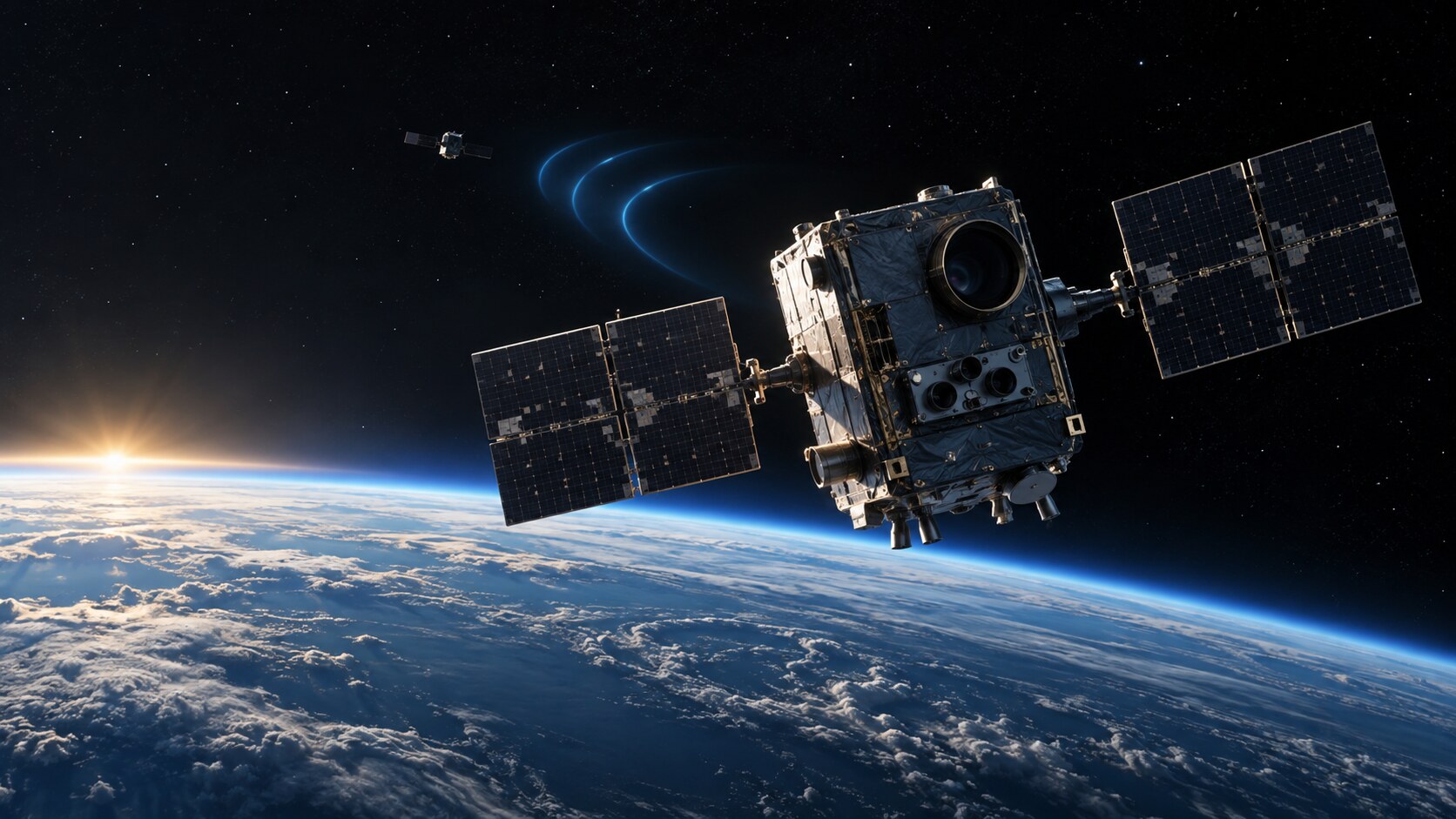
SES has launched the final three satellites in its 13-spacecraft O3b mPOWER programme, closing a deployment campaign that was delayed and expanded after technical problems affected early satellites. The launch is an important recovery milestone, but not the end of the programme’s execution risk: the new spacecraft are not expected to enter commercial service until mid-2027.
A SpaceX Falcon 9 lifted off from Space Launch Complex 40 at Cape Canaveral Space Force Station at 18:49 UTC on 13 September — 6:49 am New Zealand time on 14 September — carrying O3b mPOWER 11, 12 and 13. SES confirmed the successful launch, while Spaceflight Now reported that it was the 700th flight of SpaceX’s Falcon rocket family.
For the space economy, the more consequential milestone belongs to SES. The European operator can now move from repairing the constellation’s deployment plan to proving that the added capacity can support profitable growth in government, aviation, maritime and enterprise connectivity.
The constellation is launched, not fully operational
The three Boeing-built spacecraft join 10 O3b mPOWER satellites already providing service. They were deployed into an initial orbit and must use onboard propulsion to climb to their operating positions, followed by testing and integration with SES’s ground network. Boeing expects that process to run until around the middle of 2027.
That distinction matters. A successful launch removes one major source of risk, but it does not yet create saleable capacity. SES will need to demonstrate that all three satellites perform as designed before customers receive the planned improvement in coverage, resilience and throughput.
O3b mPOWER operates in medium Earth orbit (MEO), about 8,000 kilometres above the planet. It sits between low Earth orbit networks such as Starlink and Eutelsat OneWeb, which use much larger fleets closer to Earth, and traditional geostationary satellites positioned roughly 35,786 kilometres above the equator.
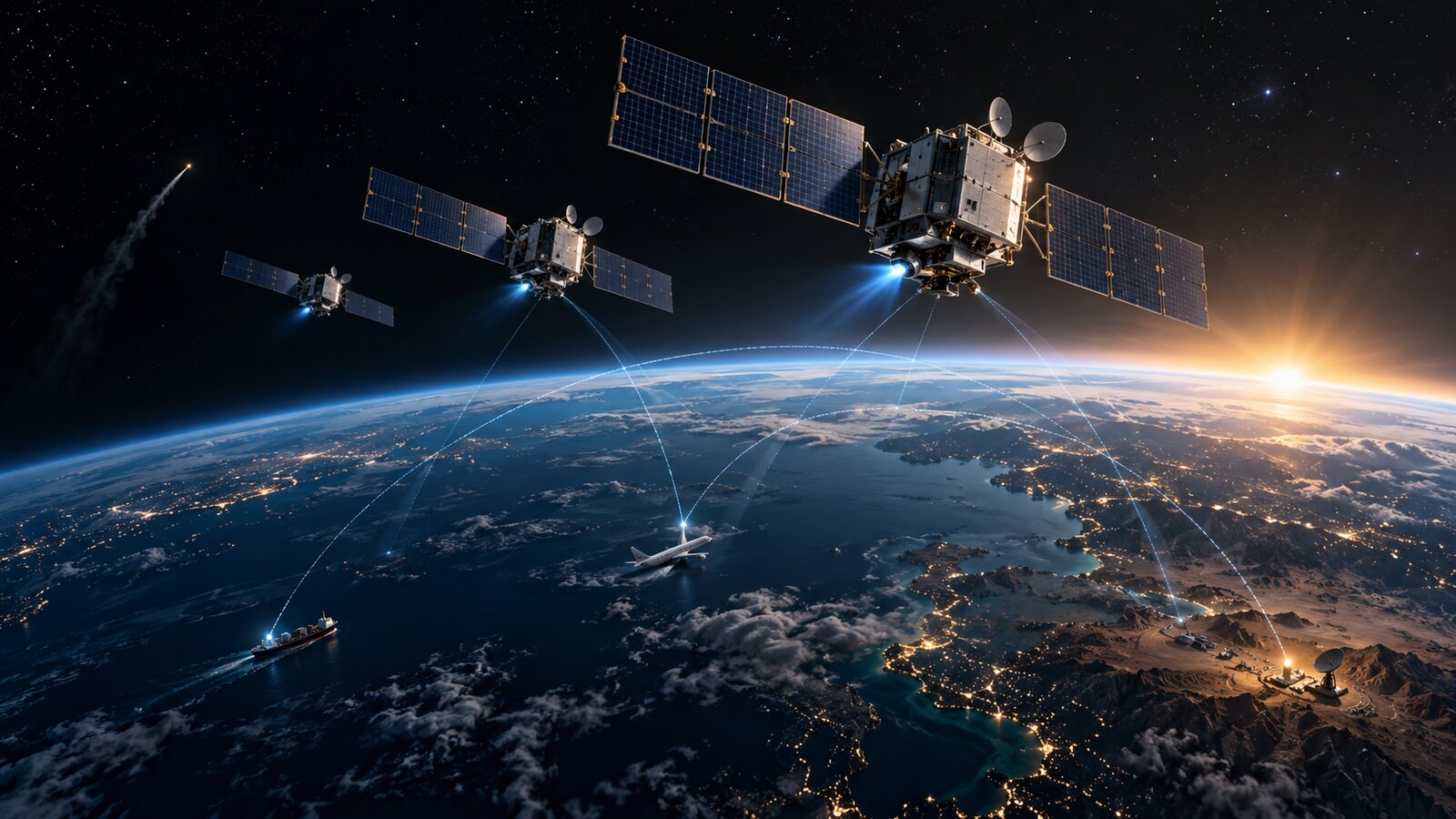
MEO gives SES a distinct commercial proposition. Its satellites can cover large areas with fewer spacecraft than a low Earth orbit constellation while delivering lower latency than geostationary systems. The software-defined payload can electronically steer and reshape beams, allowing SES to move capacity towards changing demand rather than relying only on fixed coverage patterns.
This is aimed less at mass-market home broadband than at customers willing to pay for managed, high-capacity links. SES says the system can supply anything from tens of megabits to multiple gigabits per second to an individual site, serving aircraft, cruise ships, mobile network operators, cloud connections and government users.
Those are attractive markets, but they also require specialised terminals, ground infrastructure and service integration — not merely satellites in orbit.
A recovery from early technical problems
The deployment campaign began with the first pair of satellites in December 2022. Before the fifth and sixth spacecraft launched, SES disclosed an electrical problem affecting the capacity and expected operating life of early units. Boeing modified later satellites, and SES added two spacecraft to the original 11-satellite plan.
The final launch therefore restores much of the capacity and resilience that the initial architecture was intended to provide. SES has said the full 13-satellite system could deliver a further significant capacity increase in 2027; after satellites nine and 10 entered service, it described the complete constellation as providing up to three times the available capacity of the earlier operating configuration.
That remains a company target rather than demonstrated output from all 13 satellites. The programme’s history makes commissioning performance more important than the launch count.
Why the timing matters for SES
SES is trying to reposition itself as a multi-orbit connectivity provider after completing its acquisition of Intelsat in July 2025. O3b mPOWER is central to that strategy because it supplies the lower-latency layer that complements the combined group’s large geostationary fleet.
The demand backdrop is encouraging, although SES’s group results cannot be treated as a direct measure of O3b mPOWER.
In the first half of 2026, SES reported €1.018 billion of Networks revenue, up 89% at constant exchange rates, with Mobility up 169.9% and Government & Defence up 41.9%. Those comparisons also include the consolidation of Intelsat and an €81 million aviation contract restructuring.
The company signed €1.2 billion of new business and renewals, taking backlog to €6.4 billion, according to its interim financial statements.
The same filing shows why execution matters. SES reported negative adjusted free cash flow of €130 million and adjusted net debt equal to 4.4 times adjusted earnings before interest, tax, depreciation and amortisation. Bringing the new MEO capacity into service and filling it with contracted demand would help turn past capital spending into cash-generating infrastructure.
What to watch next
The first milestone is successful orbit raising and commissioning through mid-2027. Investors and customers should then watch how much incremental capacity SES declares operational, whether service performance matches its claims, and how quickly the company converts that capacity into revenue.
Contract quality will matter as much as headline bookings. Long-term government and mobility agreements could improve utilisation and revenue visibility, while aggressive competition from low Earth orbit operators may pressure pricing.
SES must also show that its multi-orbit network can offer customers a simpler and more resilient service rather than a more complex collection of assets.
The final launch closes a difficult chapter for O3b mPOWER. The decisive test now moves from the launch pad to the network: whether SES can commission the spacecraft on schedule and make a relatively small MEO constellation economically valuable in a market increasingly shaped by far larger low Earth orbit systems.