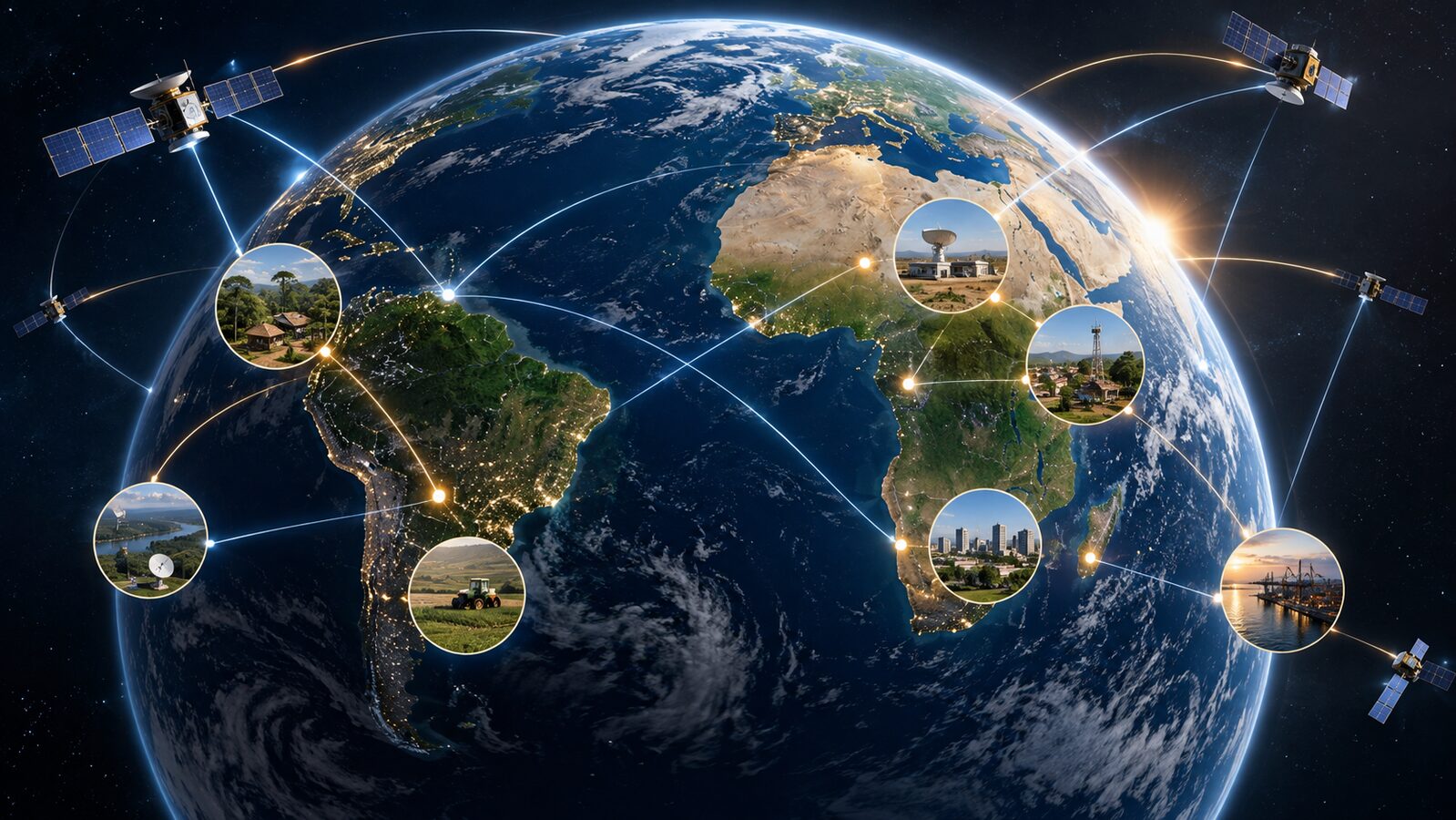

TAMPA, Fla. — Redmond-based space infrastructure startup Starcloud announced March 30 it has secured $170 million in Series A funding, pushing its valuation to $1.1 billion as it seeks regulatory approval to deploy an 88,000-satellite orbital data center network. The capital injection aims to accelerate the development of high-capacity spacecraft designed to bypass the terrestrial power and space constraints currently threatening artificial intelligence growth.
Record-Breaking Ascent
Reaching unicorn status just 17 months after completing its accelerator program, Starcloud is now the fastest company to achieve a billion-dollar valuation in Y Combinator’s history. Founded in 2024, the venture has raised approximately $200 million to date. The startup’s core mission centers on relocating energy-intensive AI compute workloads from Earth-bound server farms into low Earth orbit.
The newly secured funds will directly finance the production scaling of Starcloud-3, a massive three-ton spacecraft. This represents an exponential scale-up from the company’s previous iterations, including the 60-kilogram Starcloud-1 launched last November and the 450-kilogram Starcloud-2 scheduled for flight later this year.
To support this rapid physical growth, Starcloud is establishing a new 3,000-square-meter manufacturing facility in Woodinville, Washington.
In-House Manufacturing Strategy
Co-founder and CEO Philip Johnston noted that the company must build the 200-kilowatt-class spacecraft internally to manage the harsh financial realities of space hardware manufacturing. “We have to build it in-house because the cost equation is brutal,” Johnston said.
A former McKinsey & Co. consultant who advised national space agencies, Johnston designed the Starcloud-3 specifically for high-volume manufacturing. He described the stripped-down low Earth orbit architecture as essentially “solar panels, radiators, chips and two optical terminals.”
Rather than building a proprietary communications network, the system relies entirely on intersatellite data links with existing third-party broadband systems.
Betting Heavily on Starship
Deployment of the massive Starcloud-3 constellation hinges entirely on SpaceX’s developing heavy-lift Starship vehicle. Johnston estimates a single Starship launch can carry 50 Starcloud-3 satellites, delivering roughly 10 megawatts of computing capacity per mission.
The company’s long-term vision involves launching hundreds of satellites per month to add tens of gigawatts of capacity annually. “As soon as Starship is ready, we’ll be ready,” Johnston stated, confirming the company has already welded the chassis of the first Starcloud-3.
Starcloud anticipates flying on Starship between mid- and late-2028. This timeline aligns with industry expectations that SpaceX will begin deploying its own larger Starlink V3 satellites by early next year, opening the manifest to commercial payloads 18 to 24 months later.
The Orbital Compute Race
The orbital data center market is rapidly crowding, with SpaceX itself emerging as a primary competitor. SpaceX CEO Elon Musk recently outlined intentions to deploy up to one million “AI Sat Mini” spacecraft, each providing 100 kilowatts of power for onboard processing.
SpaceX’s February acquisition of AI firm xAI and its Grok model signals a strong internal push for in-orbit compute. However, Starcloud differentiates itself by operating purely as an infrastructure provider rather than running proprietary AI workloads.
Johnston likened the business model to leasing space in terrestrial data centers, allowing customers to install their own computing hardware and software services.
Demonstrated Technology and Profitability
Starcloud has already proven its foundational technology in orbit. The Starcloud-1 mission successfully operated an Nvidia H100 processor in space following a SpaceX rideshare launch last year.
The upcoming Starcloud-2 will mark the venture’s first satellite to process commercial cloud workloads. Early customers include AI infrastructure provider Crusoe, alongside strategic partnerships with Nvidia, Amazon Web Services, and Google. Generating eight kilowatts of power—a hundredfold increase over its predecessor—Starcloud-2 will also carry the largest commercial deployable radiator ever sent to space.
Notably, Starcloud-2 will be the company’s first spacecraft to generate more revenue than its combined design, build, and launch costs. Johnston attributes this profitability to strong demand from the Department of Defense and Earth observation sectors.
“We’ve got a whole bunch of hosted payloads on there which actually cover the whole cost of the development,” Johnston explained. “Until Starship is flying we can basically tread water launching [Starcloud-2] on Falcon 9.”
Heavyweight Investor Backing
The $170 million Series A round drew heavy-hitting institutional and angel investors, co-led by venture capital firm Benchmark and private equity giant EQT Ventures. EQT brings significant industry synergy, managing over $100 billion in assets that include more than 70 terrestrial data centers.
The capitalization table also includes Macquarie Capital, NFX, Nebular, Adjacent, 776 Ventures, Fuse Ventures, Manhattan West, Monolith Power Systems, and Y Combinator.
Prominent angel investors joining the round include former Boeing CEO Dennis Muilenburg, former Starbucks CEO Kevin Johnson, and retired U.S. Air Force Gen. Stephen Wilson. As part of the investment, Benchmark partner Chetan Puttagunta joins Starcloud’s board of directors.
Industry Implications
As the space industry monitors SpaceX’s Starship testing cadence, the viability of mass-scale orbital data centers will be the next major frontier to watch. The successful deployment of Starcloud-2 later this year will serve as a critical litmus test for commercial space computing demand.
If regulatory bodies approve Starcloud’s 88,000-satellite constellation, it could fundamentally shift how the global tech sector approaches AI infrastructure. Moving the industry’s most power-hungry processing demands off the terrestrial grid entirely could alleviate mounting energy grid strain on Earth. Industry observers will be closely tracking whether launch providers can scale heavy-lift capabilities fast enough to meet the ambitious timelines set by emerging space-compute ventures.